One outdoor unit, one indoor head
A mini split runs as its own line to the room it serves, separate from the furnace and its ducts. The gas furnace doesn't need any changes to work alongside it.
Get your mini split to the right pro
Adding a mini split alongside a gas furnace raises real questions: where it should go, how it works with the ductwork you already have, and whether your electrical panel can take it. This page gets into how that pairing works in a South Dakota home, and what it takes to size and place the unit right.
Request a proA mini split works alongside your gas furnace instead of replacing it. The furnace keeps heating the house through the cold months, and the mini split takes over cooling the room or zone it's installed in. Most South Dakota homes already have ductwork tied to the furnace, but a mini split doesn't use that ductwork at all. It runs on its own line set, with an outdoor unit and one or more indoor heads mounted directly in the rooms you want cooled. That's useful if a bedroom over the garage or a finished basement never gets enough air from the main system. The furnace and the mini split run independently, each on its own thermostat, so you're not rerouting your heating to make room for the new cooling. The main question is whether your electrical panel has the capacity for another dedicated circuit, which is worth checking before you settle on a unit size or location.


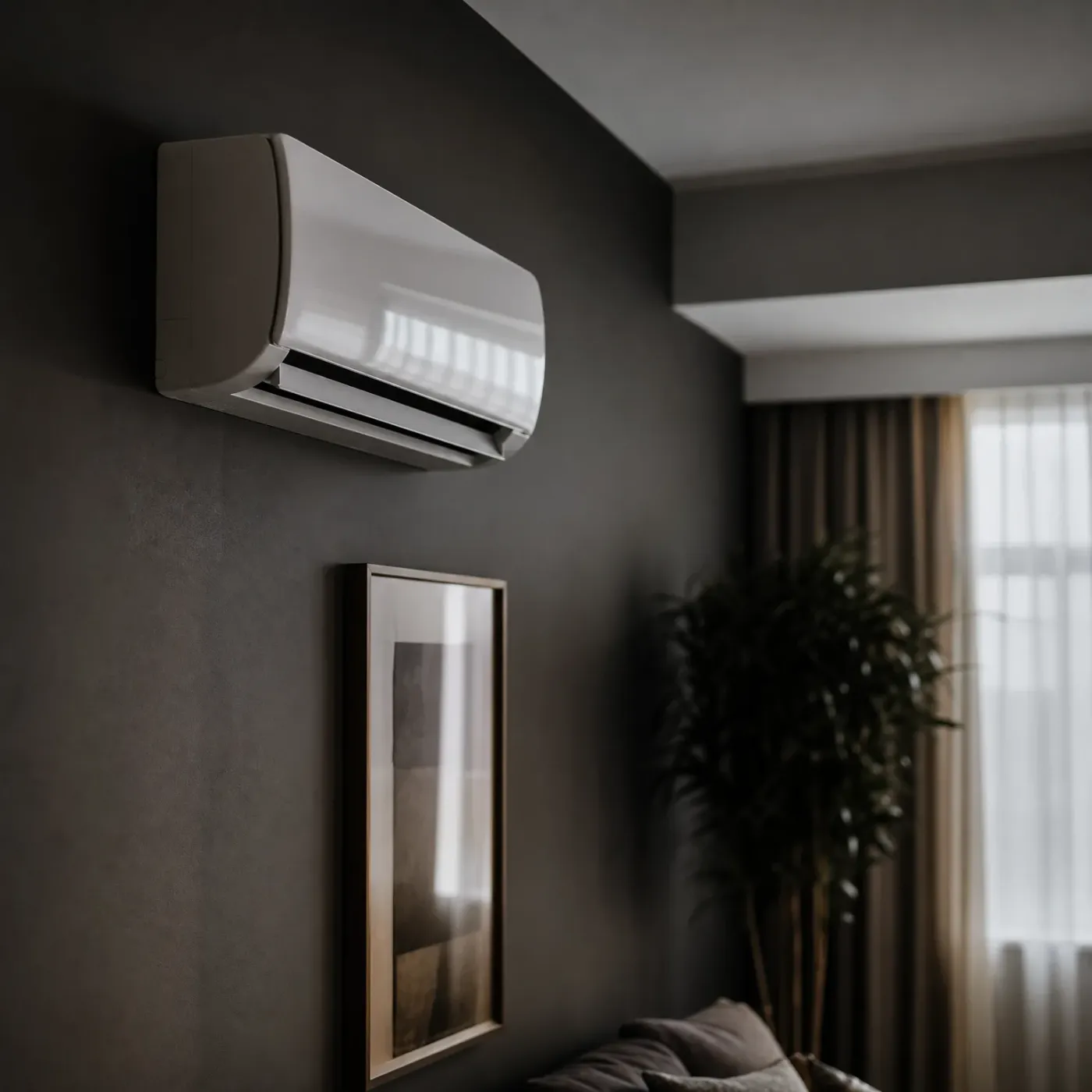
A mini split runs as its own line to the room it serves, separate from the furnace and its ducts. The gas furnace doesn't need any changes to work alongside it.
A mini split cools the room it's mounted in directly, without tying into the ducts your furnace already uses. That's what makes adding one to an existing gas system straightforward.




Right now, the rooms farthest from your furnace's ductwork are probably the ones you fuss over every August, maybe with a window unit propped in the frame or a fan running all night. A mini split head mounted in that room gives it its own cooling, controlled from that room, not from a thermostat on the other side of the house. The furnace keeps doing what it does from October through the cold months. You're not asking your ductwork to do a job it wasn't sized for, and you're not adding a second system that fights the first. The two just split the work by season and by room.
Finding someone qualified to run electrical to an outdoor unit, mount an indoor head, and size the whole thing correctly for your house is its own project before any work starts. You'd be calling around, explaining your house and your furnace setup more than once, and sorting through quotes that may not even be for the same scope of work. Submitting through this page means a contractor who installs mini splits in South Dakota homes gets your details once and reaches out to you directly. You skip the search and the repeat explaining. What they find when they look at your panel and your layout, and what they recommend, is between you and them.
At 13.32 cents a kilowatt-hour, running a mini split head through a warm South Dakota summer won't push your power bill the way a furnace tied to propane or heating oil would. It's one more reason the pairing makes sense here: cheap power cooling the room, gas still doing the heavy lifting in winter.
EIA-861 2025 statewide residential average

A mini split that gets its filter cleaned keeps the air moving the way it's supposed to. The wall stays clean around it, the room cools evenly, and the unit pulls the dust out of the air instead of letting it build up inside the casing.

Skip the filter long enough and dust turns to grime across the casing. Dark streaks spread over the vents, airflow drops, and the unit works harder to cool the same room. Left alone, that buildup can turn to mold inside the housing.
You already know which room it is. The one over the garage, or at the end of the hall, where the air from the furnace's ducts barely reaches and a box fan runs all summer just to make it bearable. Maybe there's a window unit in there now, rattling and leaking onto the sill, or you keep the door shut and just avoid the room on the hot afternoons. None of that is a furnace problem. The ductwork was built to move heat through the house in January, not to chase warm air out of one stubborn room in July. Left alone, that room stays the one you work around instead of live in.


You already know the mini split is the right fix for that one room. What's left is finding someone who can look at your panel, figure out the best spot for the outdoor unit, and run the line without tearing into ductwork that doesn't need touching. That part takes calls. Explaining the room, the furnace setup, the electrical panel, over and over to different companies, then sitting with a stack of quotes trying to tell them apart. A mini split installer has to size the unit to the room and route the line set cleanly, and getting that right matters more than getting it fast. Hand off the legwork and a contractor who installs these in South Dakota homes reaches out to you directly, already knowing what you're dealing with, so you can skip straight to the part where that room finally cools down.

A dew point averaging 56°F across June, July and August, measured over where South Dakota homes sit, is low enough that the air rarely feels heavy. That matters for a mini split because the unit doesn't have to work as hard pulling moisture out of the room to make it feel cool. It can run more on temperature alone, which is lighter work than what the same unit would do somewhere the air sits thick all summer. You'll notice it in how fast the room you added the head to actually cools down, and in how dry it feels once it does. Source: NOAA climate normals.
NASA POWER T2MDEW county cells weighted by homes


A tech surveys the room and picks the wall spot for the indoor head
A hole gets drilled through the wall for the line set
The outdoor unit gets mounted on a pad or bracket outside
Refrigerant lines, wiring and a condensate drain run between the two units

A mini split added to a house that already heats with gas does one job: it cools the room your ductwork never quite reached. The furnace keeps doing what it does all winter. The outdoor unit, the line set, the indoor head all answer to that one room, nothing else in the house changes.
Getting there means someone has to look at your panel, pick the wall and the pad location, and size the line set correctly before any of that happens. That's the part worth handing off. Once you're matched with a contractor who works on homes set up like yours, they'll reach out and walk the room with you, so you're not the one calling around or explaining the same problem twice to three different companies.


A mini split pro near you