
Best mini split setting for a South Dakota winter
Set your mini split to heat mode and pick a temperature between 68 and 70, then leave it alone. Bumping it up and down makes the system work harder without heating the room any faster. Most gas-heated homes here use the mini split as backup or for one room, so let it run steady while your furnace handles the rest of the house. Below zero, most mini splits lose capacity and run a defrost cycle to clear ice off the outdoor coil. That's normal. If yours keeps icing over past the defrost cycle, or you feel cool air coming out on a cold night, something's off, often a dirty outdoor coil, low refrigerant, or a sensor that isn't reading right. Catching that early keeps it from quitting on you during the next cold snap, and it's a lot less of a headache than losing heat in a room when it's ten below outside.


A mini split doesn't make heat the way a furnace does. It pulls warmth out of the outside air and moves it inside, even when that air feels cold to you. That's why the outdoor unit sometimes needs to run a defrost cycle, reversing for a few minutes to clear frost off the coil before it goes back to heating. If you catch steam coming off it during that, leave it be, that's the defrost doing its job. Where you mount the indoor head matters more than most people think. It reads the temperature right at its own intake, so a head near a cold window or a doorway will run longer trying to satisfy a reading that's colder than the rest of the room. And once it gets cold enough outside, somewhere around 5 degrees, the unit's heat output starts to fall off even while it keeps running flat out. Keeping the outdoor coil clear of ice, leaves and dirt matters here too. A dirty coil makes the compressor work harder for the same heat, and that shows up on your power bill.
How a mini split actually heats
- The outdoor unit runs a defrost cycle when frost builds on the coil, reversing briefly to melt it before switching back to heat.
- You may see steam rising off the outdoor unit during defrost, which is normal and not a sign of a problem.
- Below a certain outdoor temperature, usually around 5 degrees, a mini split's heat output starts to drop even though it keeps running.
- The indoor head reads room temperature at its own intake, so a unit mounted near a cold window or doorway may run longer than it needs to.
- The system heats by moving warmth from outside air into the room, not by generating it the way a gas furnace does.
- A dirty outdoor coil forces the compressor to work harder to pull the same amount of heat, raising the power it draws.


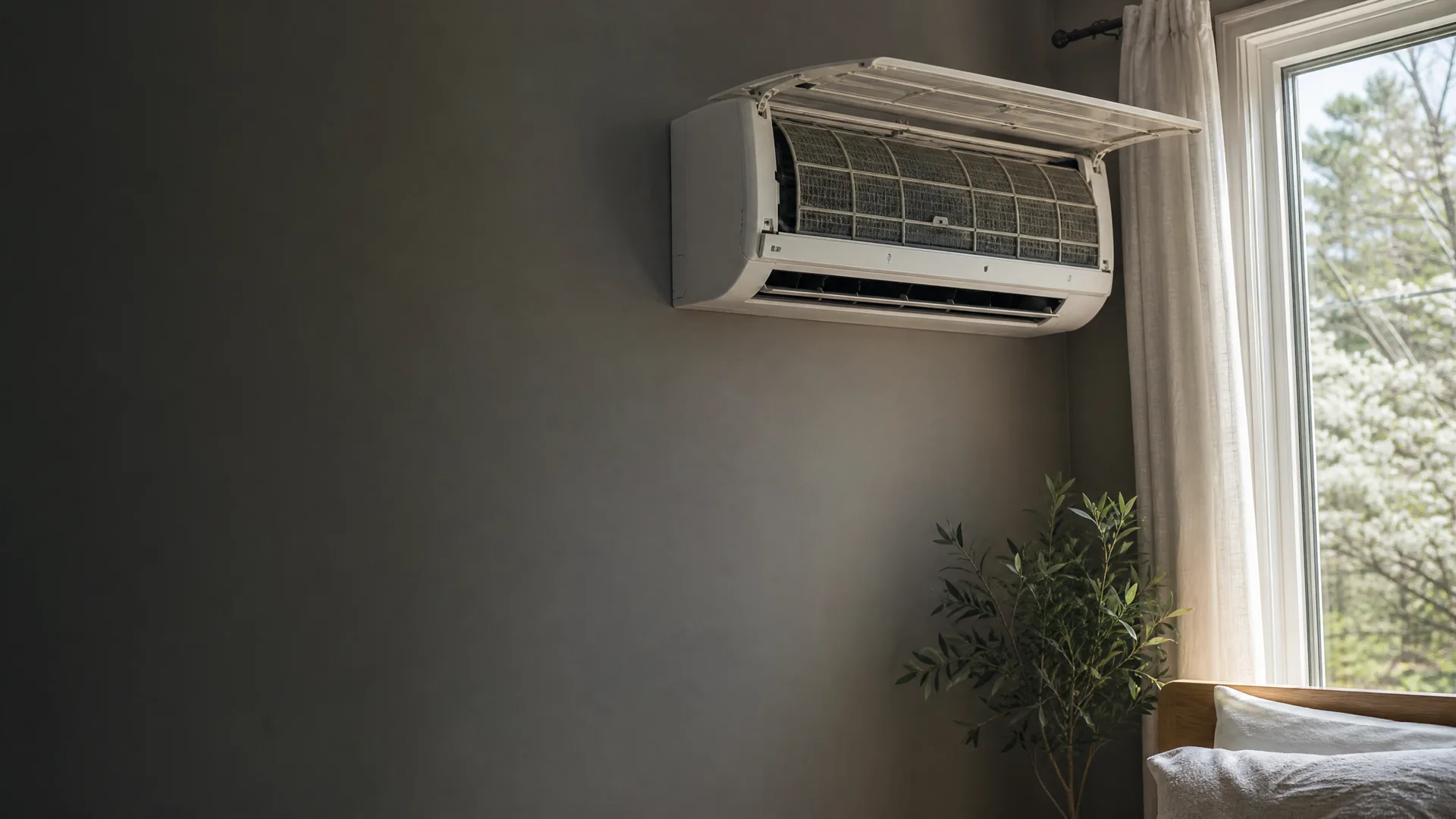
You pop the cover off the indoor unit on a warm spring afternoon, sunlight coming in across the bed, and the filter screen behind it is grey with dust. It sat under that cover all winter while the mini split ran backup heat in the room, cycling on the mornings it dropped below zero outside. Nobody looks at a filter in January in South Dakota. A contractor who services mini splits in your area every season would know what a winter of that dust does to the coil behind it, and whether it's worth a look before next winter asks the unit to work again.
Get your mini split to the right pro

A licensed local pro takes the request for your mini split tune-up.
Asking costs nothing, and the choice to hire stays yours.
Why the indoor coil needs airflow
Heat moves off the indoor coil into the room through the thin aluminum fins behind the filter. When those fins pick up dust, the air can't pass through them as easily, so the unit has to push longer to move the same amount of heat. A filter that gets rinsed or vacuumed a few times over the winter keeps that coil doing the job it's sized for, instead of quietly losing ground to buildup you can't see from across the room.
What a yearly check catches early
A contractor who services mini splits through a South Dakota winter checks the same handful of things each visit: refrigerant charge, the condensate drain, the outdoor coil, and the defrost sensor. These are the parts that cause most no-heat calls, and most of them show warning signs weeks before they fail outright. Catching a weak defrost sensor in October costs you one visit. Catching it in January, when the unit's leaned on hardest, costs you a week without the room it heats.

What a clogged filter costs you in your own living room
Picture the room where your mini split sits. If it's backing up a gas furnace, that unit might only run a few hours a day, in the morning before the furnace kicks on or in a back bedroom you keep closed off. A dirty filter in that kind of setup can go unnoticed for a long time, because the room never gets uncomfortable enough for you to check. Power here is cheap, so the extra draw doesn't show up as a number you'd catch either. What you'd notice, if anything, is that room running longer than the one down the hall, or staying a few degrees cooler than you set it.
That's the kind of thing a local contractor catches before it becomes a bigger job, someone who services mini splits through a South Dakota winter and knows which models clog fast and which units in a house tend to get ignored. Get matched with one who works in your area and they can look at your specific setup, not just hand you a general checklist.


Summers in South Dakota run with a dew point around 56°F, based on NOAA climate averages, so the air stays dry even on a hot afternoon. That matters more for your mini split in winter than you'd think. A unit that spent summer barely working, because dry air cools off fast with little moisture to pull out, builds up less condensation and less grime on the indoor coil than units in muggy states. Come winter, that same coil needs clean airflow to pull warmth out of the air outside. A dusty filter still slows it down, dry summer or not.
NASA POWER T2MDEW county cells weighted by homes


Where that leaves your mini split
- A mini split set between 68 and 70 and left alone heats steadily through a South Dakota winter without extra strain.
- Frost on the outdoor coil and steam during defrost are normal parts of how the unit heats your home, not faults.
- A dusty filter or coil makes the unit run longer for less heat, and that shows up on the gas furnace's workload too.
- A local contractor who services mini splits every winter knows which parts tend to fail first in this kind of cold.
- Getting matched with one contractor near you means one call back, not a string of companies competing for the job.
- Where your mini split stands now comes down to the setting it's on and how clean the filter and coil are behind that cover.
A mini split in a South Dakota winter does its best work when you stop touching it. Set it between 68 and 70, leave it there, and let it run as backup heat while the furnace carries the rest of the house. Frost on the outdoor coil and steam during defrost are the unit doing its job, not warning signs. The part that actually decides how well it heats is what's behind the cover: a clean filter and a clean coil move air the way the unit was built to move it. Dirt there makes it run longer and heat less, and on a backup system that mostly means a colder room before the furnace catches up.
That's the part a filter change won't fix on its own, because knowing what's actually failing on a mini split in cold weather takes someone who sees that failure every winter, not just every so often. A contractor local to South Dakota who services this equipment season after season knows which parts tend to go first in this kind of cold, and can look at your unit knowing what it's been doing all winter, not guessing from a general checklist.
When you request service through this page, you're matched with one contractor near you, not handed off to several competing for the job. That means one call back from someone who already knows the setup they're walking into. Your mini split's condition right now comes down to two things: the setting it's on, and what shape the filter and coil are in behind that cover. Both are worth checking before the cold sets in harder.





The right pro for this job
Only one pro gets your request, so you hear from one company.
No fee to send it, and nothing to sign.