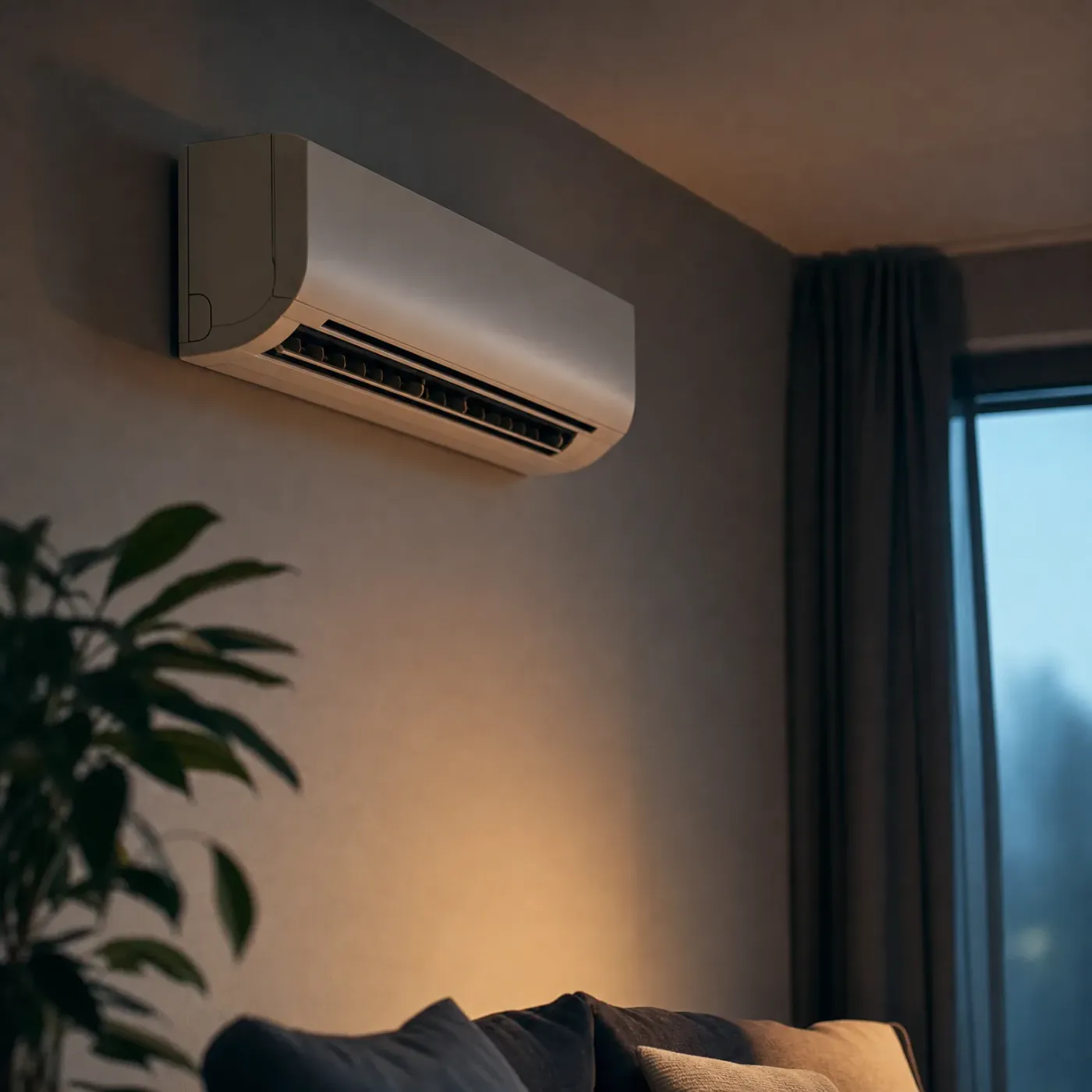








A white wall-mounted mini-split indoor unit near the ceiling of a dimly lit room, with a curtained window at right, a leafy potted plant at lower left, and a cushioned sofa at the bottom.

Matched to your mini split job

Is a mini split cheaper than baseboard heat in South Dakota

Baseboard heat runs on electric resistance, and with power cheap here, that bill might be lower than you'd think. Whether your mini split actually beats it depends on how it's sized and set up in your home. If you want a straight answer for your house, a contractor who knows the local rates can look at your setup and tell you.

Find a pro near me

A mini split usually costs less to run than baseboard heat in South Dakota, because it moves heat instead of generating it from electricity directly, which uses less power for the same warmth. Baseboard heat turns electricity straight into heat, one unit of power for one unit of heat. A mini split can move two or three times that much heat for the same power, as long as it's sized right and your home holds heat well. Cold snaps change the math some, since a heat pump works harder as the outdoor temperature drops, but most winter days here aren't that cold. What this means for you is that a mini split installed and sized for your home should cost less to run through the winter than baseboard heat would, though the gap depends on your house and how the system was set up.

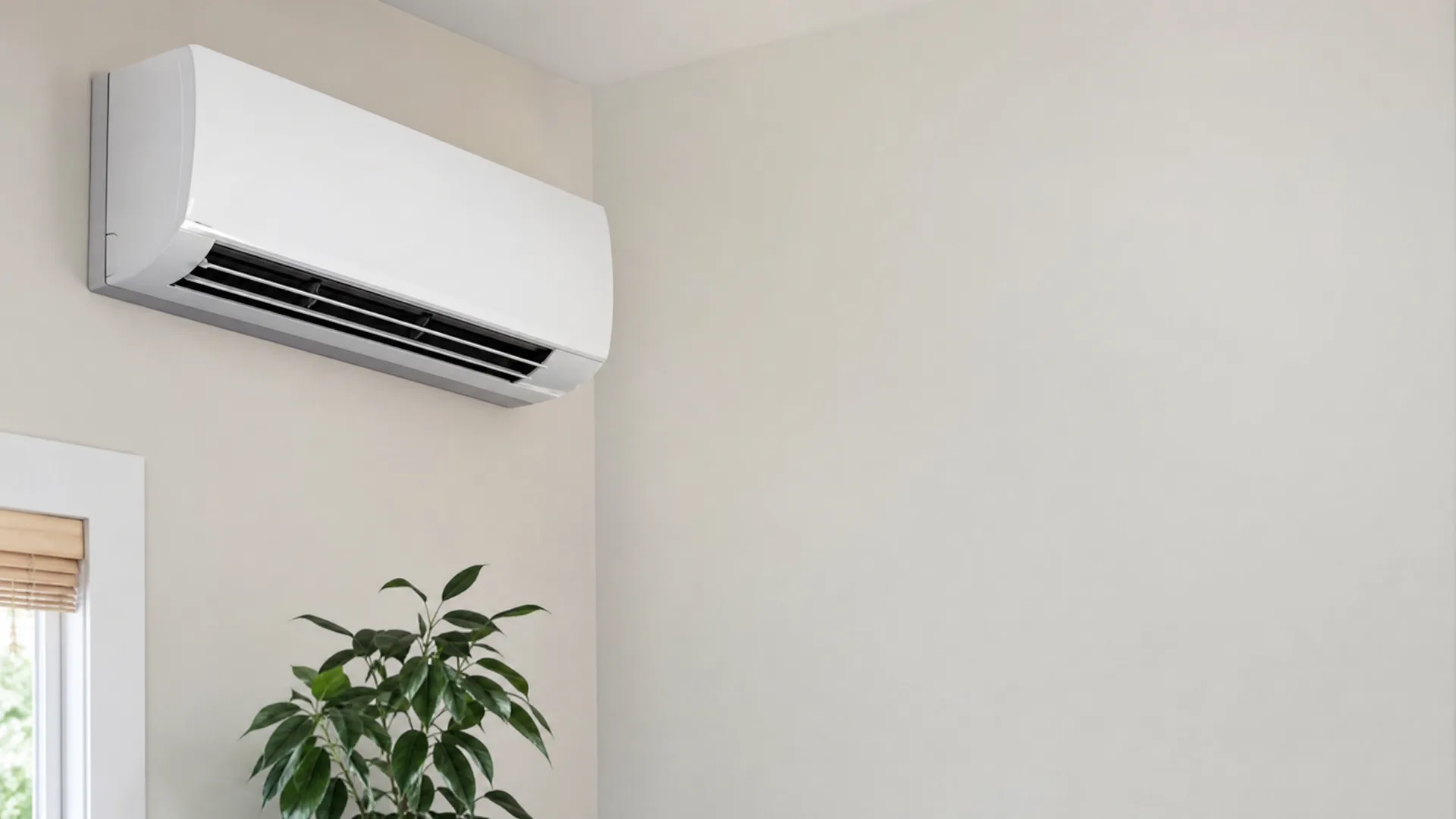
A white wall-mounted mini-split air conditioner near the ceiling of a beige interior corner, with a green houseplant and a curtained window at the lower left.

How a mini split moves heat

Baseboard heat has one job: resistance wire gets hot and that's your warmth, so every watt in gives you a matching watt of heat. A mini split's outdoor unit pulls heat out of the air outside, even when it's cold, and moves it inside through refrigerant. That process can deliver more heat energy than the electrical energy it uses to run the compressor, which is why it tends to cost less to run than baseboard for the same room.

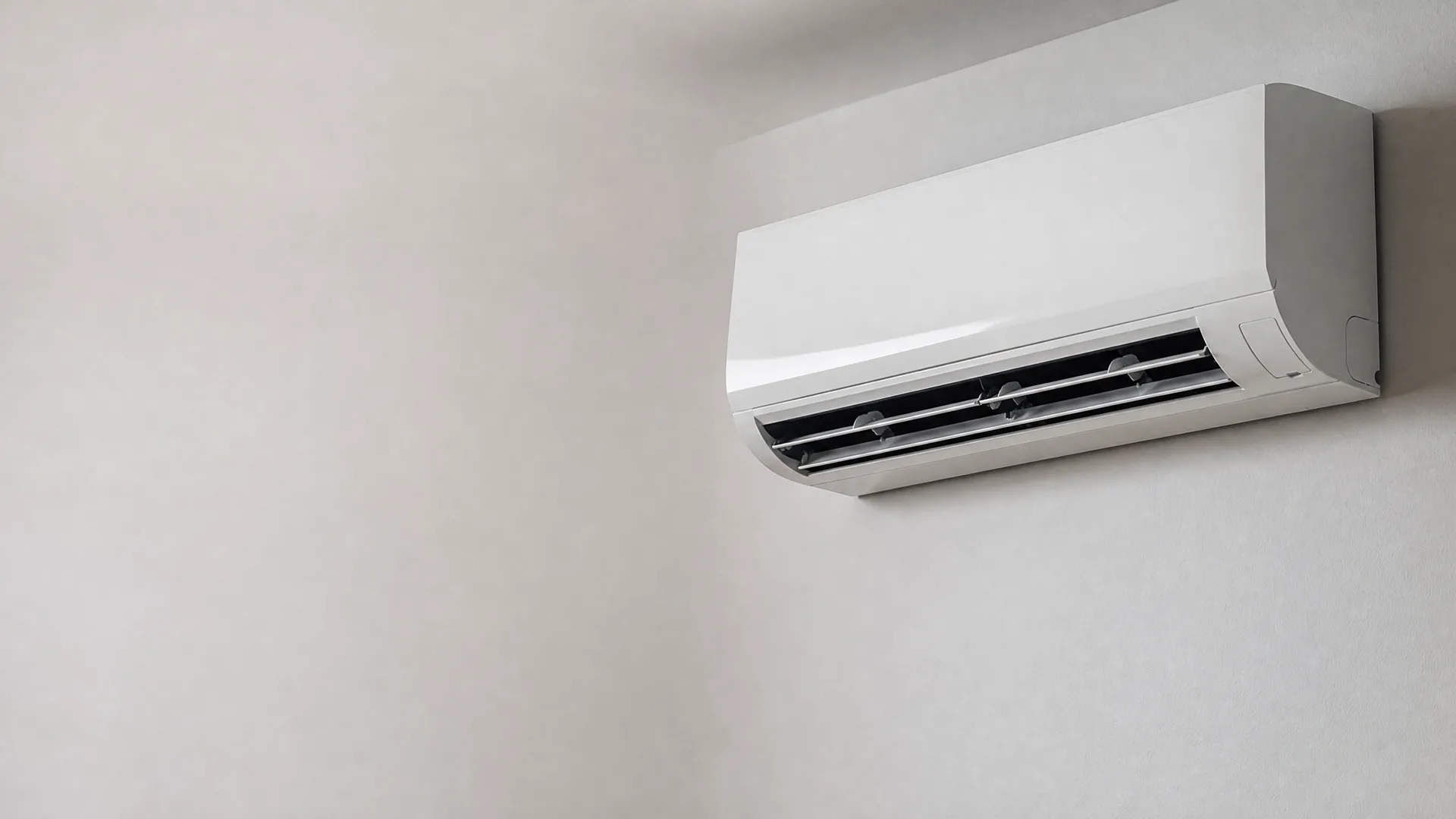
A white wall-mounted mini-split air conditioner indoor unit on a plain light gray wall, positioned to the right of frame.

Where this matters in your setup

This only holds if the mini split is sized and placed right for the room it's heating. A unit that's too small will run constantly and lean on backup heat strips, which turn it into baseboard heat with extra steps. A unit that's too big will short cycle and never settle into its efficient range. Since power is cheap in South Dakota to begin with, the gap between a well-sized mini split and baseboard heat may be narrower than it would be somewhere with higher rates, but it still favors the mini split when the install is done right.

Why does one room still feel colder than the rest?

If your mini split heats the main living area and baseboard still runs in a back bedroom or basement, you're paying two ways at once, and you might not notice until the bill comes. Check which rooms actually have a wall unit and which are still on the old baseboard loop. A mini split sized for the space it's covering should keep up on its own down to pretty low temperatures, so if you're running both heat sources in the same room all winter, something about the sizing or the setup wasn't matched to that room. That's worth a second look before you assume the mini split isn't pulling its weight.

A woman with long gray hair wrapped in a checked blanket sits on a sofa by a window with yellow autumn foliage outside, with a lamp, framed picture and plant in the background.
An older woman in a cream knit sweater sits on a sofa by a window, looking out at sunlit trees with yellow and orange autumn leaves, with a bookshelf and lamp behind her.
A woman with gray shoulder-length hair in a dark knit sweater sits on a cushioned seat by a window, looking out at yellow autumn foliage, with a living room, armchair, houseplant and framed picture behind her.
An older woman with gray hair in a bun, wearing a cream knit sweater, sits on a sofa with a gray blanket and looks out a large window toward yellow-green autumn trees, with a lit table lamp and dark armchair behind her.

How cold does it have to get before my mini split stops keeping up?

A South Dakota winter gets well below zero some nights, and you've probably wondered if your mini split just quits when it's coldest out, right when you need it most. That's the night you'd be leaning on baseboard heat as backup, so it matters to know where that line actually sits for your unit.

Most cold-climate mini splits still produce heat down to around minus 15°F, but output drops as the temperature falls

The outdoor unit works harder to pull heat from colder air, so as the temperature drops, the amount of heat it can deliver drops with it. A cold-climate model is built for this and keeps running well below zero, but somewhere in that range it can't fully keep up on its own, especially overnight when temperatures bottom out. That's where baseboard heat earns its keep here, covering the gap on the coldest stretches rather than running all winter. A standard mini split, not rated for cold climates, falls off sooner and leans on baseboard more. Check the spec sheet or the installer's paperwork for your unit's rated output at low temperatures. It tells you exactly where that line sits for your house.

A single-story house with light gray horizontal siding, dark gray shingled gables, black shutters and a dark front door, fronted by a mulched bed of small shrubs and a large lawn under a clear blue sky.

Summers here don't carry the heavy, sticky air you'd get further south. The dew point averages 56°F across June, July and August, which counts as comfortable almost anywhere. Your mini split isn't fighting moisture to cool the house, so it doesn't need to run as hard or as long to pull humidity out of the air before the room feels right. That matters more for the cooling side of the unit than the heating side, but it's part of the same system, and a unit that isn't straining in July tends to hold up better once the cold months test it instead. If you're weighing that against baseboard heat, a contractor who's looked at your home and how it's set up can tell you more than a dew point number ever will.

NASA POWER T2MDEW county cells weighted by homes

A mini split pro near you

Skip the round of in-home estimates for a new mini split.

Sending the form costs nothing.

A mini split that's sized right for your home can carry the heating load on its own most winter nights, with baseboard left to cover the coldest stretches or the rooms it doesn't reach well.

A mini split that's undersized or placed wrong leans on baseboard more than it should, and you end up paying the resistance-heat rate for warmth you expected to get cheaper.

A dusty, discolored white wall-mounted mini-split air conditioner unit installed high on a plain interior wall below a white ceiling molding.
Before you get your mini split installation
A white wall-mounted mini-split air conditioner on a beige interior wall, with a cream curtain and window at left, a potted plant on a ledge at right, and a wood floor below.
After you get your mini split installation

When the mini split carries it

A mini split that's sized for your square footage and set up with cold-climate controls can handle most of your winter heating on its own. Baseboard switches on only when it drops to the temperature where the mini split starts losing capacity. Your electric bill runs mostly through the mini split's compressor, which still moves more heat per watt than the baseboard's resistance wire. That's where the savings show up. It takes a correct sizing job and a thermostat setup that actually lets the mini split lead, with baseboard as backup rather than a second system running alongside it out of habit.


When baseboard still does the work

If the mini split only covers one room or the ductless head is undersized for the space, baseboard ends up carrying more of the load than it should, especially in back bedrooms or a basement it wasn't placed to reach. You're then paying for two heating systems instead of one doing most of the job. Power here is cheap enough that straight baseboard heat isn't ruinous on its own, but running it alongside a mini split that isn't pulling its weight means you're not getting the lower cost per watt the mini split is supposed to deliver. Checking the setup matters more than which equipment you own.

Power costs 13.32 cents per kilowatt-hour statewide

At 13.32 cents per kilowatt-hour, every kilowatt your mini split uses instead of baseboard costs you the same low rate, but it still takes fewer of them to make the same heat. That gap is what shows up smaller on your bill each month.

EIA-861 2025 statewide residential average

A woman in a cream knit sweater sits in an armchair with her eyes closed and head tilted back, beside a window showing orange autumn foliage and a wooden side table with a mug.
A gray-haired man in a blue quarter-zip sweater sits in an armchair with his eyes closed, beside a large window with bare trees outside and a potted plant and lamp nearby.

Where You Stand on Cost

  • A mini split sized and set up right for your home costs less to run than baseboard heat most winters here.
  • Where it falls short is almost always sizing, placement, or controls, not the technology itself.
  • A room still running on baseboard while the rest of the house runs on the mini split is paying for heat twice.
  • Cold snaps below zero are where baseboard earns its keep, filling in what the mini split can't carry alone.
  • Instead of calling around and explaining your setup to each contractor, you can get matched with one who already knows what cold-climate mini splits need here.
  • Your actual savings depend on your home's layout, insulation, and how the two systems are balanced against each other.

A mini split that's sized for your home and set up with cold-climate controls will usually beat baseboard heat on your power bill, even with electricity priced the way it is here. The gap isn't about which technology is better. It's about whether yours is carrying the load it should. A mini split that's too small for the square footage it's heating, or placed where it can't reach every room, ends up leaning on baseboard more than it needs to, and that's when the savings shrink or disappear. The rooms still running on baseboard while the mini split handles the rest are the ones worth checking first. So are the nights below zero, when baseboard is doing exactly what it's supposed to do and the mini split isn't meant to carry that load alone.

None of this is something you can answer from a chart. It comes down to your layout, your insulation, how the two systems are balanced, and whether the setup matches what a South Dakota winter actually asks of it. Getting a straight answer usually means calling a few contractors, walking each one through your home, and comparing what they tell you against what the last one said. Skip that part. Get matched with a contractor who already works with cold-climate mini splits in homes like yours, and let them look at your setup instead of you explaining it from scratch five times over.

A modern two-story house with dark siding and stone base at dusk, with lit soffit lights, a path of large rectangular pavers set in dark gravel, planting beds, a lawn, and an orange and blue sunset sky above distant trees and water.

Mini Split Installation

A local pro for your mini split installation

Step 1 of 3: Equipment
  • A brown leather and wood armchair with a cream knit throw sits in a corner beside a woven basket holding a dark cushion, under a framed mountain photograph, with a wood-trimmed window showing yellow and green foliage.
    • Say what's going on with your mini split, and a pro who works on them reaches out.
    • A local pro who knows mini splits gets your details and gets in touch.
  • A dark wood dresser against a pale wall holds a ceramic vase of eucalyptus branches, a stack of books with a wooden bowl, and a woven basket, with a framed landscape painting above and a woven basket holding a knit blanket on the floor beside a window.
    • Once you send the form, finding a pro is off your list.
    • After you send the request, you're done searching.
  • A window seat with beige linen and brown textured cushions, a chunky knit blanket, and an open book, beside a window showing blurred yellow autumn foliage.
    • Skip collecting and comparing quotes for the new mini split.
    • Explain the job once and skip repeating it on every call.
  • A cream upholstered armchair with a rust-colored pillow and knit fringed throw sits beside a window with a ceramic vase of orange-leafed branches on the sill, overlooking autumn trees and leaf-covered ground.
    • One installer gets your project, so there's no bidding war over it.
    • Your request stays with one local pro.




