Tell us about the job
Takes about a minute. No obligation.
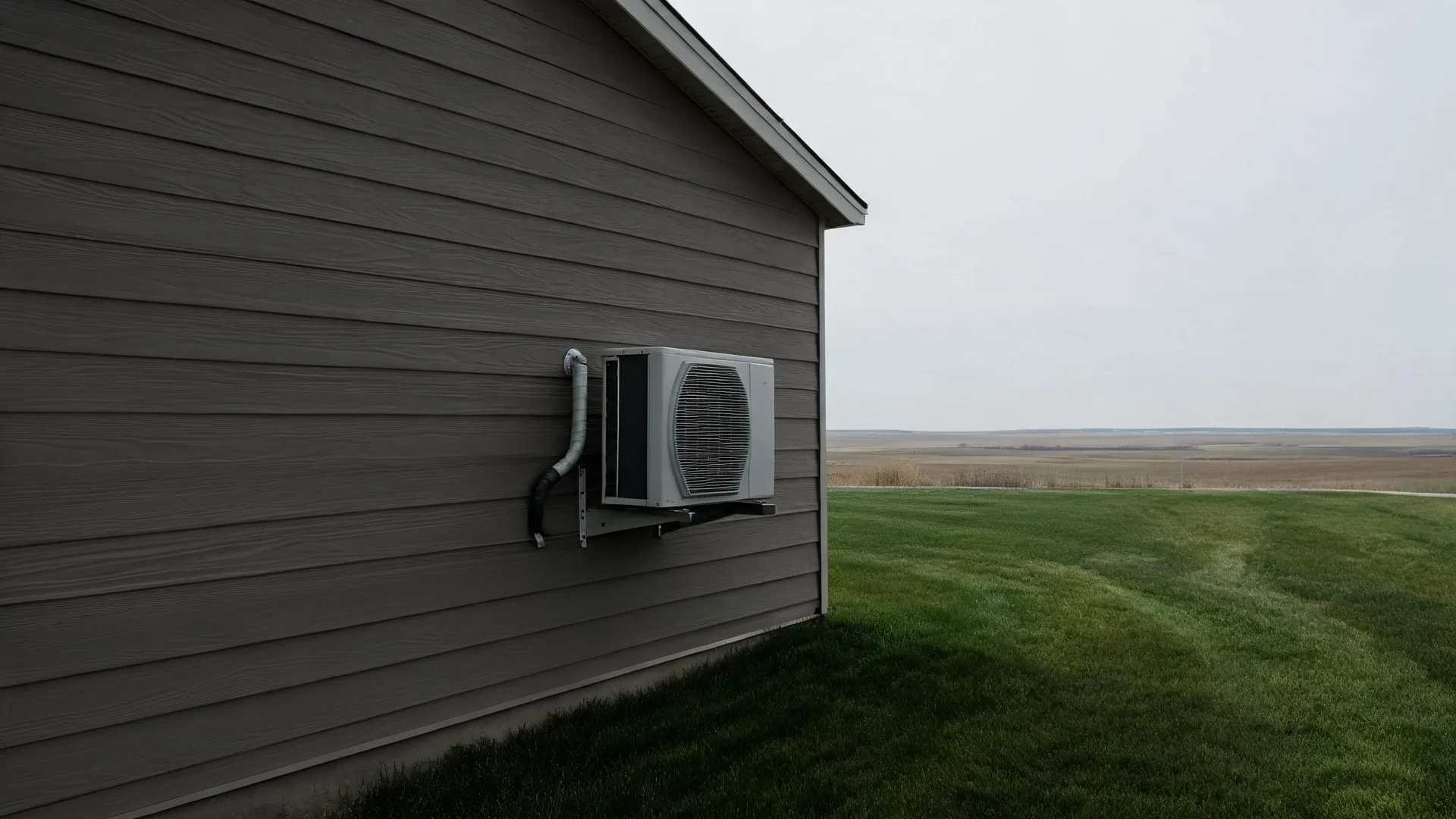
Sizing a mini-split for Custer County starts with what the compressor is actually being asked to do each year. Homes in Custer County, SD run cooling about two months a year, from July through August. The compressor, the condenser fan, and the contactor stack their starts and stops into that narrow window, with almost no runtime outside it. An undersized unit runs longer cycles trying to keep up, and a unit installed without a proper load calculation stresses the same components the same way. A contractor who skips the sizing work hands the homeowner a bill for it later.
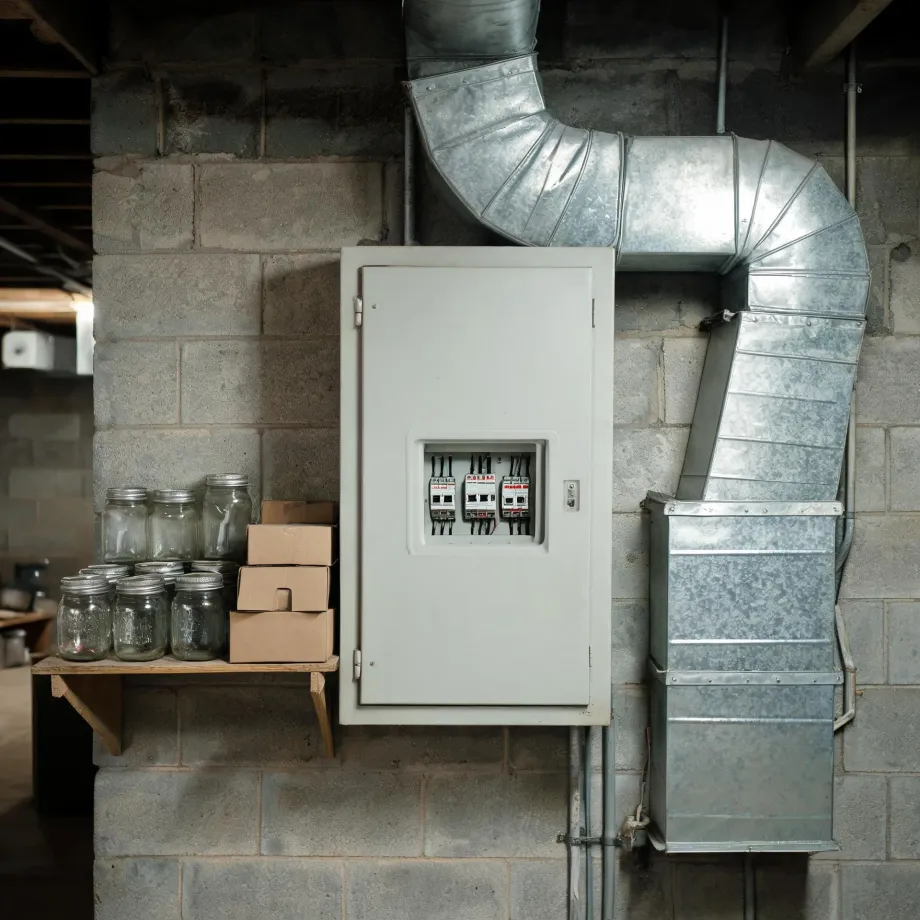
Electrical panels in houses built for an earlier generation of equipment were sized around what those systems drew, and a ductless mini-split draws differently. Half the homes in Custer County, South Dakota were built in 1994 or earlier (2020-2024 ACS 5-year). That gap between what the panel was designed for and what a new mini-split will pull is where a contractor spends time before the install can be quoted. The unit itself is straightforward to specify; what a licensed contractor has to settle first is whether the existing service supports it without an upgrade.
The Parts of a Mini-split System and Where They Go
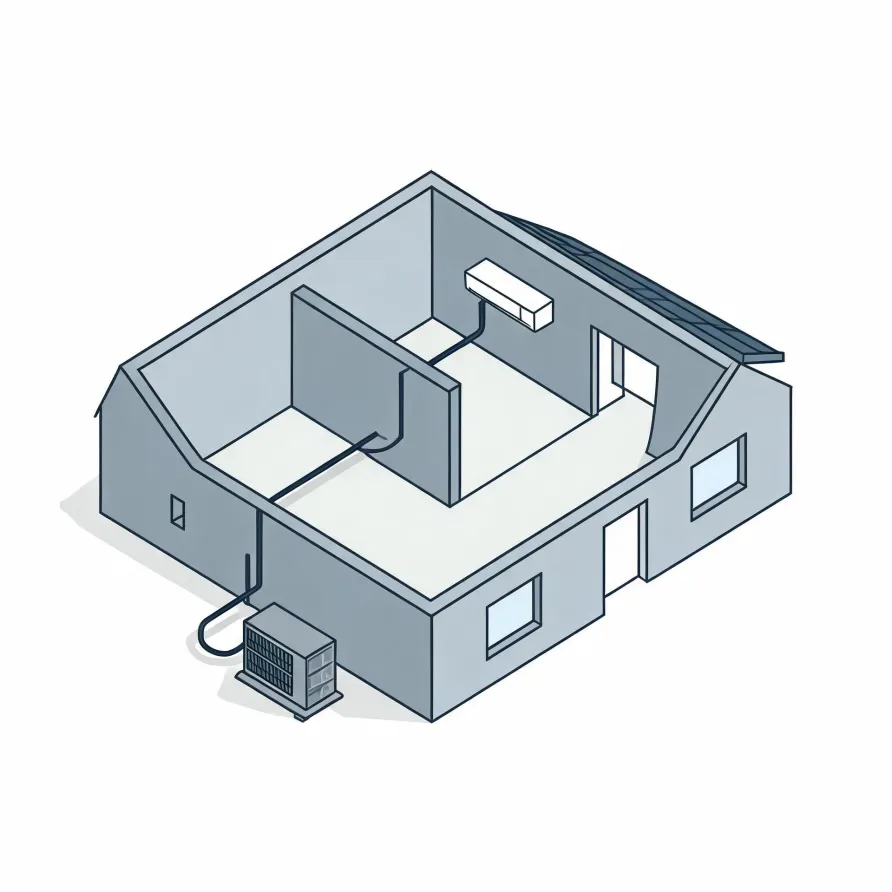
The indoor air handler mounts high on a wall inside the room being conditioned, and it is the piece a homeowner sees every day. The outdoor condenser unit sits on the ground or on a bracket outside the house. Together they make up the working pair a contractor installs in a standard single-zone setup.
A refrigerant line set runs through a small hole in the wall to connect the indoor and outdoor units, carrying the lines that let the two sides work together. A condensate drain line runs from the indoor head to the outside, clearing the moisture the unit pulls from the air. A disconnect box mounts near the outdoor unit to give the electrical supply a safe local shutoff.
The drawing shows a typical layout, and a licensed contractor determines what fits the specifics of your house.
Find a contractor in Custer CountyCuster County by the Numbers
530 severe weather events were recorded in Custer County, South Dakota between 2015 and 2024.
NOAA National Centers for Environmental Information, Storm Events Database, bulk CSV export, events 2015-01-01 through 2024-12-31.Half the homes in Custer County, South Dakota were built in 1994 or earlier (2020-2024 ACS 5-year).
U.S. Census Bureau, 2020-2024 American Community Survey 5-Year EstimatesCuster County, South Dakota holds 5,291 housing units (2020-2024 ACS 5-year).
U.S. Census Bureau, 2020-2024 American Community Survey 5-Year EstimatesOwners occupy 85.6% of the occupied homes in Custer County, South Dakota (2020-2024 ACS 5-year).
U.S. Census Bureau, 2020-2024 American Community Survey 5-Year EstimatesSevere Weather History in Custer County
Heating and cooling equipment in Custer County works against whatever the climate puts on it, and that load shapes which systems hold up and how they are sized. Weather history here is part of the installation question.
530 severe weather events, 2015–2024. Source: NOAA National Centers for Environmental Information, Storm Events Database.