
What a mini split tune-up covers in South Dakota
What does a mini split tune-up include in South Dakota?
You're thinking ahead to next summer, or maybe next winter if you run your mini split for heat too, and you want to know what actually happens when someone comes out to service it. A tune-up means different things to different companies, so it helps to know what's actually getting checked and cleaned before you book one.
A tune-up checks and cleans both the indoor and outdoor units, start to finish
A mini split tune-up covers the indoor air handler and the outdoor compressor unit together, since both have to work right for the system to heat or cool. That means cleaning the indoor filters and coil, clearing the condensate drain, checking refrigerant pressure, and inspecting the outdoor coil and fan for dirt or ice buildup. South Dakota winters push these systems hard if you're using one for heat, and a clogged outdoor coil makes the unit work harder in cold air than it should. Summers here are warm but not humid, so the coil doesn't fight moisture the way it would elsewhere, but dust and cottonwood fluff still build up on the outdoor unit and slow airflow if nobody checks it.
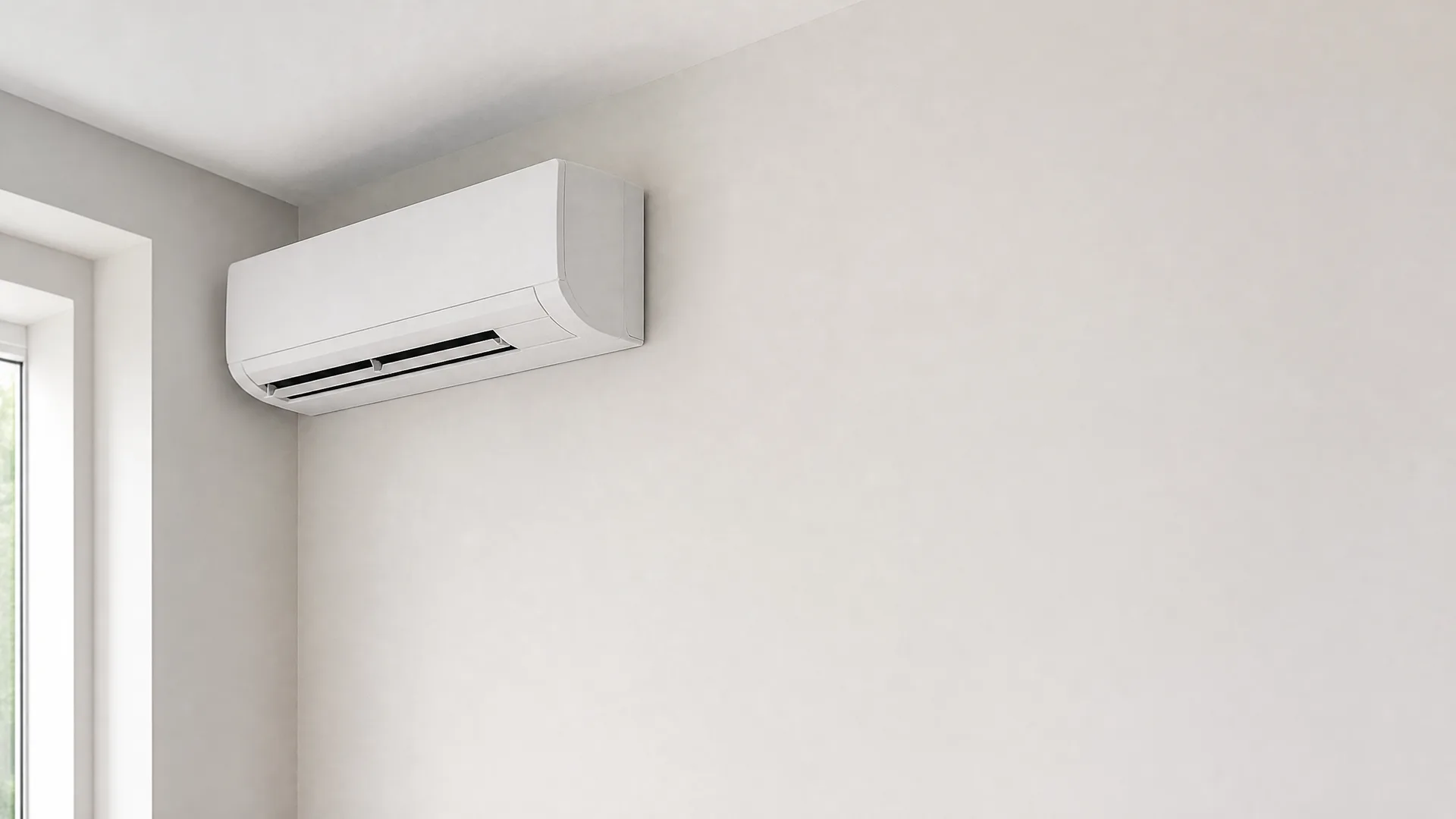
The coils do the real work
Your mini split has two coils, one inside and one outside, and they move heat instead of making it. Dust and pollen settle on the indoor coil's fins over a season of running. The outdoor coil collects grass clippings, cottonwood fluff and plain road dust. A tech straightens bent fins and washes both coils clean, because a coil that can't shed heat makes the compressor work harder to do the same job.

The filters decide the airflow
Most mini splits use washable filters right behind the front cover, not the throwaway kind you'd find on a furnace. A tech pulls them, rinses them, and lets them dry before they go back in. A filter packed with a summer's worth of dust chokes the airflow across the indoor coil, and that's one of the first things checked, since it takes minutes and changes how the whole system performs.
Service It Now or Risk It Later
Tune-Up
- A tech cleans the indoor coil and the outdoor coil so the system can move heat the way it's supposed to.
- The filters come out, get washed or replaced, and the condensate drain gets checked so it isn't backing up.
- The refrigerant charge gets checked against what the unit calls for, since a low charge makes the compressor work harder all season.
- Electrical connections get tightened and the outdoor unit gets cleared of grass clippings and leaves sitting against the cabinet.
- Takes an hour or two and the unit keeps running the rest of the year without a service call.
- Costs the same whether it's July or January, since it's one visit and nothing gets replaced.
No Tune-Up
- Dust on the indoor coil and debris on the outdoor coil build up quietly, and the system still runs, just not the way it was.
- A clogged drain line can back up and leak inside before you notice anything is wrong.
- A refrigerant charge that's drifted low stays low until something fails outright, usually the compressor.
- The unit pulls more power to do the same job, and on a hot July afternoon or a cold January night that shows up on the bill.
- Small problems, a dirty filter, a loose wire, a blocked outdoor coil, sit there until one of them causes the unit to shut down.
- Whatever goes wrong tends to show up when you need the unit most, not on a convenient afternoon.
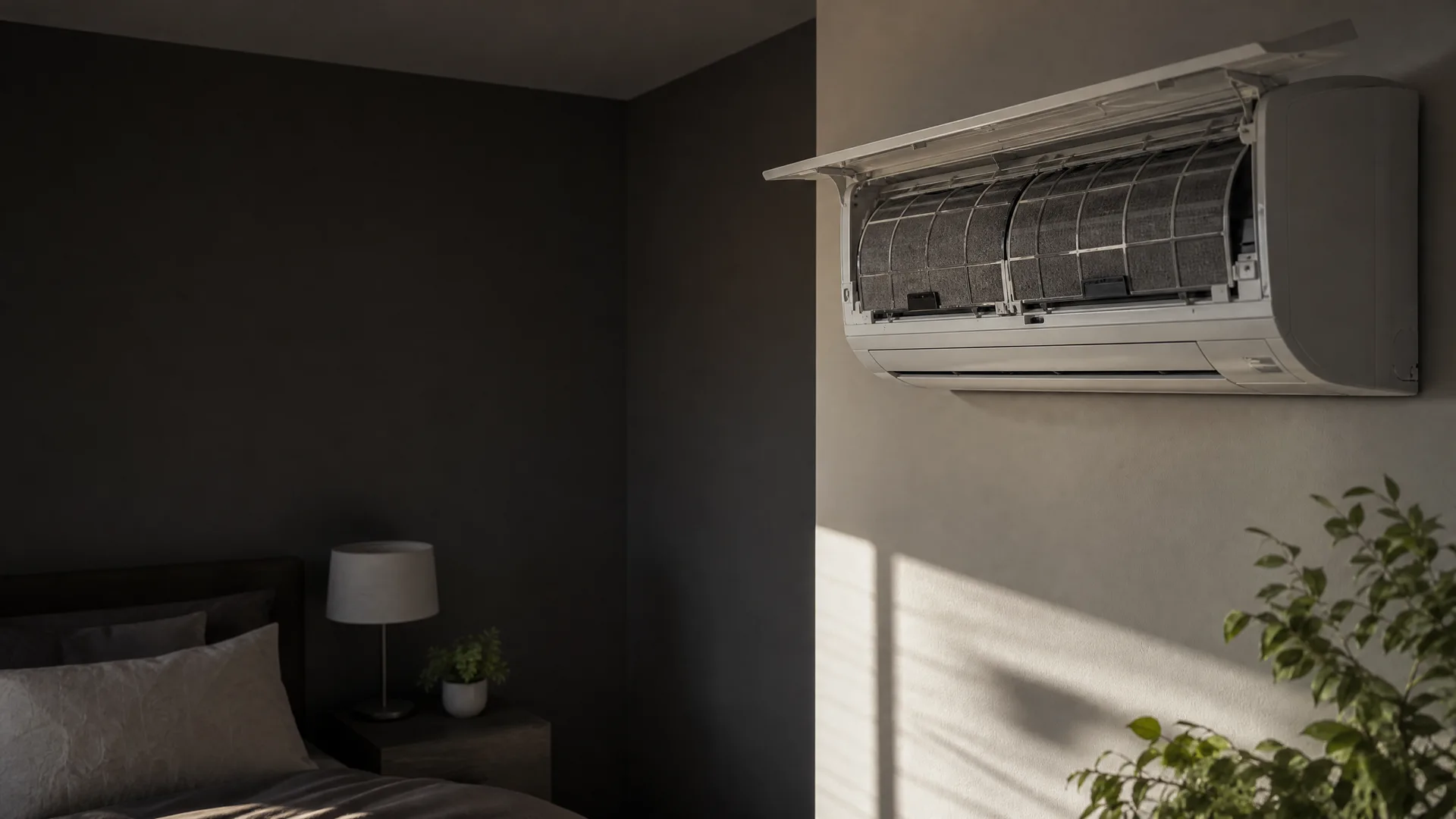
You pull the cover off the indoor unit on a warm April afternoon, light coming through the bedroom window, and the filter screen behind it is grey with a season's worth of dust. You hadn't planned on looking. You just noticed the air coming out felt thin for how hard the thing sounded like it was working. South Dakota air doesn't carry the heavy pollen load some places get, but a winter of gas heat running underneath it still leaves dust moving through the house, and it finds this screen. You set the cover down on the bed and figure you'll send in the form tonight. Someone local who deals with these units all season can tell you if it's just the filter or something more, and you can stop wondering about it.
Done looking for a mini split pro
You've read what's involved. Finding someone who actually knows mini splits is the part that usually drags. Most HVAC outfits around here spend their time on furnaces, since that's what heats most houses in South Dakota, and a mini split gets treated like an afterthought. Send the request and it goes to one local contractor, someone who services this equipment through the warm months and again when people run it for heat, and who's seen which coil gets neglected and which filter gets forgotten. You're not fielding five calls trying to figure out who's legitimate. One person gets your information, already knows the unit you're dealing with, and takes it from there. That's the part that's done once you send it. The coil dust and the thin airflow you noticed are the kind of thing that waits for you to deal with it, or doesn't, depending on how long you let it sit. Handing it off now means it stops being something you have to track down yourself.
The parts of the check nobody sees
- A tech checks the line set insulation where it runs through the wall, since gaps there let the refrigerant lines sweat and waste energy.
- The indoor blower wheel gets inspected for buildup, since a dirty wheel throws air unevenly even with a clean filter and coil.
- Electrical connections at the outdoor unit get tightened, since vibration from the compressor running all season can work screws loose.
- The tech reads the system's error history through the indoor unit or remote, since most mini splits log faults the owner never saw.
- Drain line slope gets checked, not just the drain pan, since a flat or sagging line lets water sit and backs up into the unit.
- The outdoor unit's base and mounting brackets get checked for rust or looseness, since South Dakota winters put stress on anything bolted outside.
Most of what a mini split tune-up covers happens where you'd never think to look. The line set that runs from the outdoor unit through the wall is wrapped in insulation, and that wrap wears or gaps over time. When it does, the refrigerant line sweats, and that moisture either drips somewhere you don't want it or just means the system works harder than it should. Inside, the blower wheel sits behind the coil and filter, spinning air through the room. It collects a film of dust the filter never catches, and once that builds up, air comes out uneven even though everything in front of it looks clean. Outside, every screw and terminal on the unit vibrates a little every time the compressor cycles. Over a season, that works connections loose, and a loose connection is how you end up with a system that trips out or runs rough. The unit itself logs its own history. Most owners never check this, but the tech pulls it up through the indoor unit or the remote, and it shows faults that never made enough noise to notice. The drain line matters as much as the pan underneath it. If it sags anywhere along its run, water sits instead of flowing out, and that's how it backs up into the unit itself. And the bracket holding the outdoor unit to the wall or pad takes a beating from a South Dakota winter. Rust and loosening there show up slow, which is exactly why it gets checked every time rather than only when something's obviously wrong.





The tech pulls power to the unit before opening any panel.
The indoor filter and coil cover come off first.
The indoor coil gets washed, then the blower wheel.
The condensate drain gets flushed so it drains clean.


Power costs 13.32 cents per kilowatt-hour statewide
At 13.32 cents a kilowatt-hour, running your mini split doesn't hit hard here. A neglected unit still costs you more than it should, since a dirty coil or clogged filter makes it work harder to move the same heat. A tune-up keeps that cost where it belongs.
EIA-861 2025 statewide residential average
A mini split tune-up in South Dakota comes down to the coils, the filters, and the refrigerant charge, checked and cleaned so the system moves heat the way it was built to instead of straining to do it. That's the whole job. Finding someone to do it right is the part worth being particular about. A tech who works on mini splits all year, not just when a furnace call happens to involve one, knows which failures show up first in this climate and what to check before it becomes a bigger repair. You'll hear back from one contractor, licensed and local, not a handful of companies competing for your callback. No sorting through quotes, no explaining your setup three times to three different people. You already know what the service covers now. The rest is just getting it scheduled with someone who treats a mini split as the main job, not the afterthought.





It's off your list after this
A licensed local pro takes the request for your mini split tune-up.
Sending the form costs nothing.