
Why your mini split makes noise in a South Dakota winter

Step 1 of 3: Equipment

A mini split that pops, hisses, or rattles once a South Dakota cold snap hits is usually reacting to the defrost cycle. When outdoor temperatures drop well below freezing, frost builds on the outdoor unit's coil. The system switches into defrost mode to melt it off, and that switch often comes with a clunk or a hiss as the reversing valve changes direction and refrigerant shifts through the lines. A steady clicking can be the outdoor fan starting and stopping as it cycles through defrost. None of that is unusual on its own. What matters is whether the noise stops once defrost ends or keeps going. A grinding or squealing sound, or noise that continues well after the frost should have cleared, points to something worth having looked at, like a failing fan motor or a valve that isn't seating right.

A white wall-mounted mini-split air conditioner near the ceiling of a room with light gray walls, white crown molding, and a beige curtain at the left edge.

Normal winter operation

This is what a working mini split sounds like in defrost mode: a soft whoosh of air, a click as the valve switches, maybe a brief hum from the outdoor fan. The sounds come and go in a few minutes, then the unit goes back to quiet heating.


A dusty beige wall-mounted mini-split air conditioner indoor unit installed high on a plain light-colored wall below the ceiling.

Needs a look

Dust and grime built up like this on the indoor coil and housing choke airflow, and a mini split working that hard against its own buildup runs louder and longer during defrost. Dark staining on the wall points to a condensate drain that isn't clearing the way it should.

A woman in a cream cowl-neck sweater sits by a window with snow outside, in a dimly lit living room with a sofa, lit lamp, mirror, candles and a fireplace.
A woman in a gray turtleneck sweater sits beside a large window looking out at snow-covered evergreen trees, in a dimly lit living room with a lit fireplace, lamps, couch and houseplant.
A woman in a cream turtleneck sweater stands beside a large window with snow-covered ground and bare trees outside, in a dimly lit living room with lamps, a sofa and framed art.
A woman in a grey cowl-neck sweater stands indoors near a window, looking out at falling snow, with a lamp, framed picture and couch in the warmly lit room behind her.

The defrost cycle runs in a set order, and each step makes its own sound. First the reversing valve shifts, which is the click you hear. That redirects refrigerant so the outdoor coil can heat up and shed frost instead of absorbing heat from the air. Right after the click, refrigerant rushes through the valve in its new direction, and that's the hiss. The indoor fan backs off or shuts off at the same time, because the air coming off the indoor coil would otherwise feel cold. Outside, the fan slows or stops too, since moving cold air across a coil that's trying to warm up just works against the process. Once the coil's temperature and the outdoor sensor tell the system the frost is gone, it switches back, and the whole cycle reverses. The water that melted off the coil has to go somewhere, so it runs down the casing and drips, sometimes landing where it pops or taps against metal. None of this involves the compressor grinding or rattling. If that's what you're hearing instead of a click and a hiss, the defrost cycle isn't the cause.

What's Happening Inside the Unit

  • The reversing valve is what clicks when the system switches between heating and defrost, and that click is normal.
  • During defrost, the indoor fan usually stops or slows so cold air isn't blown into the room while the outdoor coil thaws.
  • A hissing sound right after the click is refrigerant moving through the valve as it changes direction.
  • The outdoor fan can slow down or stop completely during defrost, then ramp back up once heating resumes.
  • Meltwater draining off the outdoor coil can pop or drip against the casing, which sounds worse than it is.
  • If the compressor itself is rattling or grinding rather than clicking and hissing, that points to a mechanical problem, not defrost.
A bearded man in a plaid flannel shirt stands indoors looking out a frost-covered window, with a steaming dark blue mug on the wooden sill and snow-covered trees outside.
A smiling man in a dark blue T-shirt sits on a light gray sofa in a living room with a wooden shelf and window behind him, with a laptop edge visible in the foreground.

Get the right pro for your mini split

Send the request today and let a mini split pro reach out to you.

It costs nothing to send, and you don't have to hire anyone.

What That Noise Means for Your House

  • A rattle that keeps going after the defrost cycle ends usually means ice has built up unevenly on the outdoor coil.
  • A mini split left to labor through repeated defrost cycles all winter can run up the power bill even with cheap rates here.
  • Loose panels or a fan blade clipping ice will get louder on the coldest South Dakota nights, not quieter.
  • If the outdoor unit is buried in snow or blocked by a drift, it can't shed frost properly and the noise will persist.
  • A failing reversing valve sometimes gets stuck mid-cycle, so the system keeps clicking and hissing without ever settling into steady heat.
  • Ignoring a new noise through one cold snap often means dealing with a bigger repair, or no heat at all, during the next one.

A new noise this winter is worth checking before the next cold snap, not after. Ice does not build evenly on an outdoor coil. When it piles up on one side, the fan blade can start clipping it with every rotation, and that sound gets worse, not better, as the temperature drops. Check the unit itself first. If it's sitting in a snowbank or tucked under a roof edge where drifts collect, it can't shed frost the way it's designed to, and the defrost cycle will keep running without ever finishing the job. That's the system laboring, and a mini split that labors through defrost over and over pulls more power to do it, even with rates as low as they are here. A loose panel is a simpler fix than it sounds, but left alone it vibrates louder on the coldest nights, which is exactly when you don't want to be troubleshooting outside. The one that deserves the least patience is a reversing valve stuck mid-cycle. That's a part failing, not ice doing what ice does, and it tends to mean the system never settles into steady heat no matter how long you wait it out. Most of these start small: a click that lingers a few extra seconds, a hiss that wasn't there last month. Catching it during one cold snap is a lot less than catching it during the next one, when the unit may not come back on at all.

A white wall-mounted mini-split air conditioner indoor unit installed near the ceiling on a plain light-colored wall, with its horizontal outlet vent and louvers visible.
Before you get your mini split repair
A white wall-mounted mini-split air conditioner on a beige interior wall, with a curtained window on the left and wood flooring with a light rug below.
After you get your mini split repair
A white wall-mounted mini-split air conditioner on a beige interior wall, next to a window with sheer white curtains and green foliage outside.

Quiet and clear

A mini split running right stays out of the way. Air moves out of the vents, the curtains barely stir, and the unit on the wall just sits there doing its job. You'd walk past it and not think about it once.

A dusty, discolored wall-mounted mini-split air conditioner indoor unit on a plain white wall, with its horizontal louvers and vent grille visible.

Caked in dust

Grime built up like this across the top and vents blocks airflow before you hear a single pop or rattle. The coil underneath works harder to move the same air, and that strain is often what turns an ordinary defrost cycle noisy.

Power costs 13.32 cents per kilowatt-hour statewide

At 13.32 cents a kilowatt-hour, running a mini split through repeated defrost cycles all winter costs you less here than almost anywhere else. That's still a reason to get the rattle looked at before it turns into a part failure.

EIA-861 2025 statewide residential average

A woman stands in the open black front door of a white-sided house with a dark shingled roof while a man in a navy jacket approaches along the walkway, with lantern wall lights, a potted shrub, and flowering garden beds nearby.

A noisy defrost cycle is normal. A noise that won't quit isn't.

Your mini split is going to click and hum through the winter. That's the reversing valve doing its job and the outdoor fan clearing frost off the coil. Once you've heard it a few times, you'll know the pattern, and you'll know when something breaks from it. A rattle that hangs on after the unit should've gone quiet, a hiss that doesn't ease up, ice that doesn't clear. Those are the ones worth acting on before a cold snap turns a loose panel or an uneven coil into a bigger repair.

You don't need to wait until the unit quits on a January night to do something about it. Send in what you're hearing and where the sound is coming from, and you'll be matched with a contractor who works on mini splits in your area. They'll take it from there and reach out to sort out what's going on with yours. That's one less thing on your list this winter.

A wooden table holding a stone vase with a bare branch, two stacked books and a small dark bowl, beside a window with green foliage outside and a sofa in the dim background.
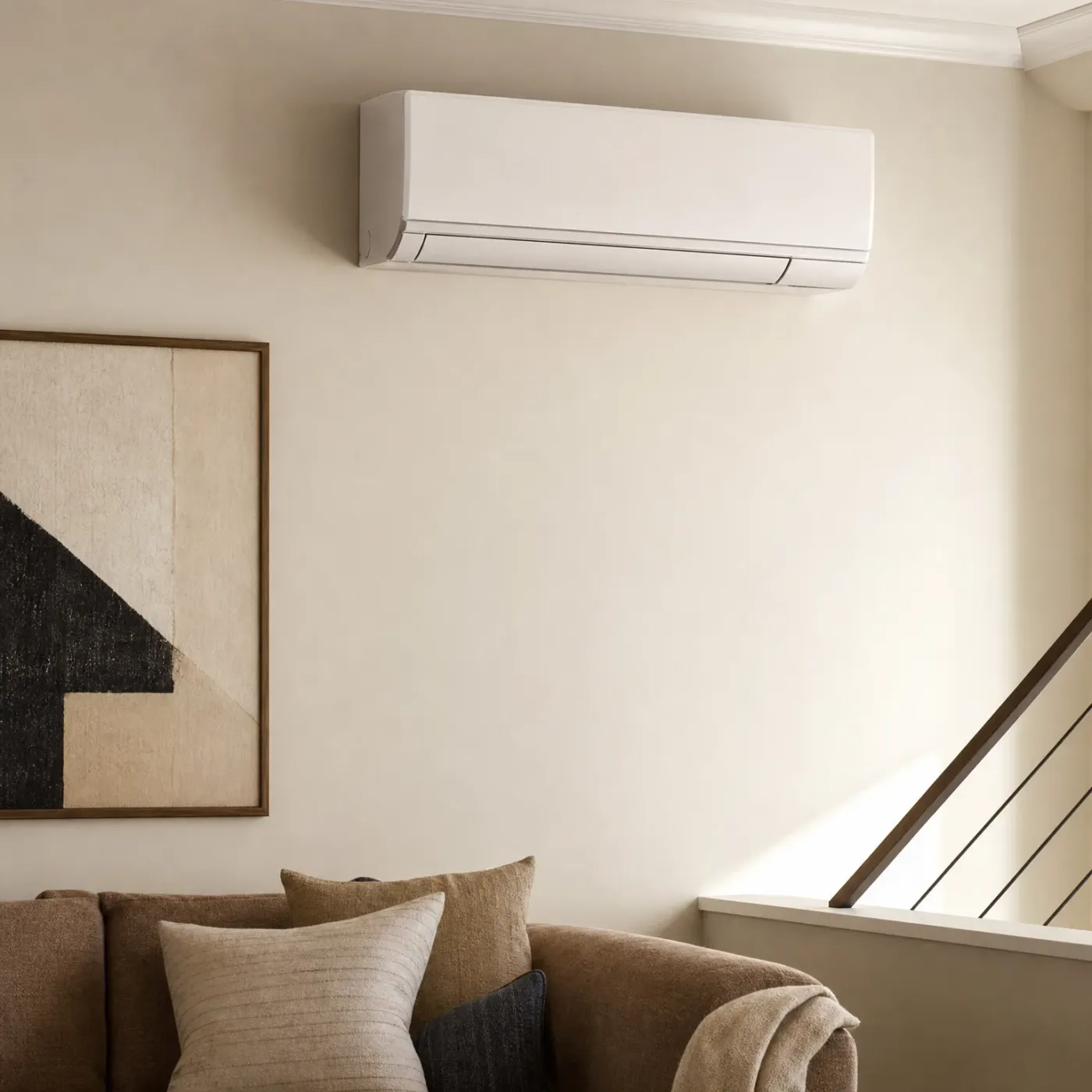
A white wall-mounted mini-split indoor unit high on a beige interior wall, above a brown sofa with cushions and a throw, beside a framed abstract artwork and a stair railing.

A pro who works on mini splits

Let a pro reach out

Get the mini split repair search off your mind today.

No charge to send it. You decide if you hire them.