Running clean
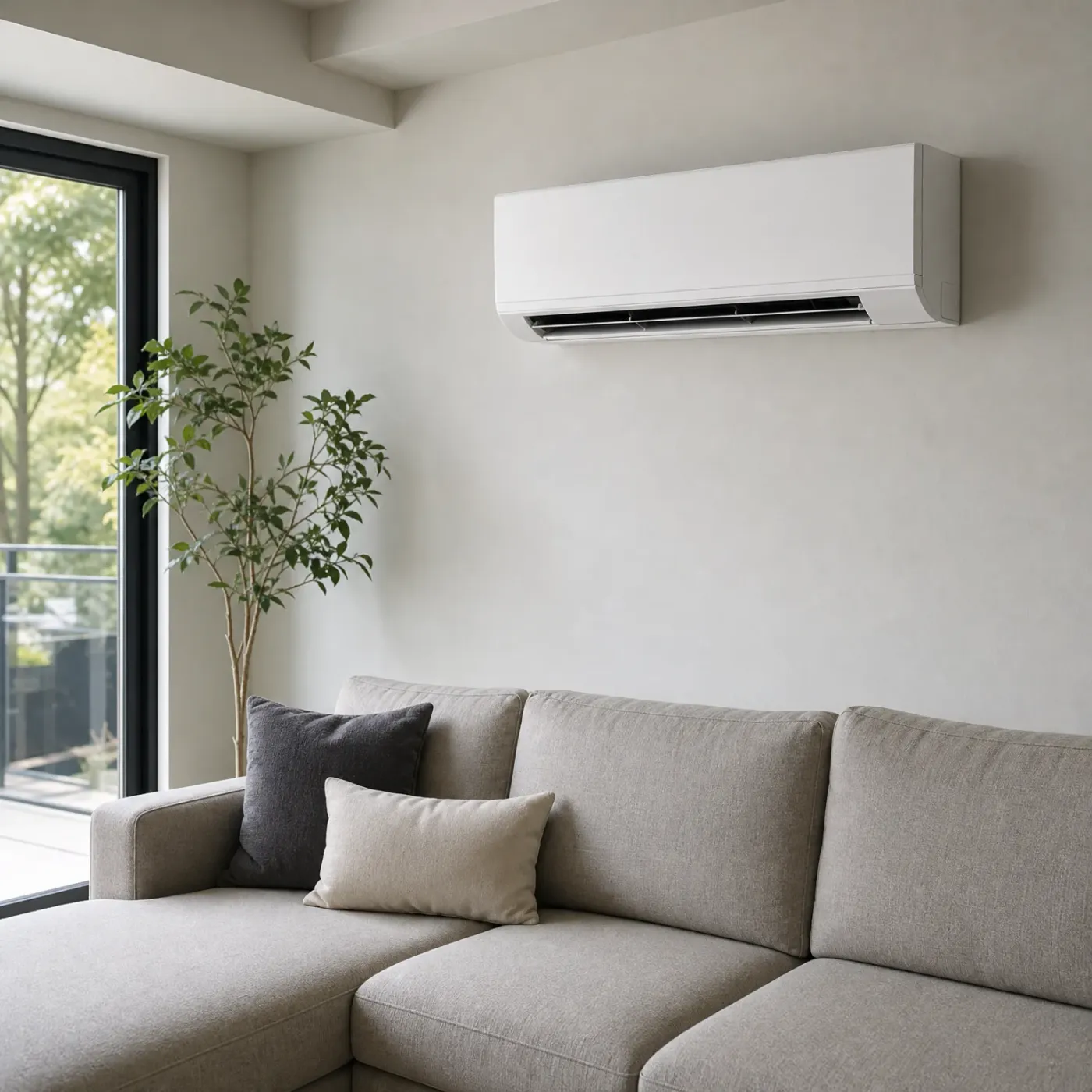
A mini split that's been kept up looks like this. The coil stays dry between cycles, the wall around it stays white, and the air coming off it has no smell at all, heating or not.
A musty or sour smell when your mini split is heating usually means the indoor coil has grown mold or mildew, and the heat is pushing that smell into the room. A gas burning smell, different from that, points to dust burning off the heating element and should clear in a few minutes. If it doesn't clear, or if the smell is sharp or electrical, that's not dust. In South Dakota, most homes heat with gas, so the mini split is often handling only part of the house, maybe a room that doesn't get even heat otherwise. That coil sits in a closed cabinet most of the year and collects moisture during warm weather use, so by the time heating season starts the smell shows up fast. A smell that lingers or gets worse points to something that needs a look, not something to just wait out.





Once that smell shows up, it tends to come back every time the unit kicks on, because the mold is sitting right in the coil, not just passing through the air once. You'll likely notice it most in whatever room that head serves, especially first thing when it starts heating after sitting idle. Shut doors won't help much since the smell rides the airflow out of the unit itself.
Left alone, it's not just unpleasant. A coil that's grown mold stays dirty until someone cleans it properly, and a dirty coil makes the unit work harder to push out the same heat, which shows up on your power bill even with rates as low as they are here. A local contractor who services mini splits all winter will know whether that smell is a straightforward coil cleaning or something tied to how the unit was draining or installed. Getting matched with one means someone looks at your specific unit instead of guessing over the phone.


A mini split's indoor coil is cold on the surface whenever it runs the cycle that pulls humidity out of the air, and water collects there even in a dry South Dakota summer. That moisture sits on the coil fins along with dust pulled in through the filter. When winter comes and the unit switches to heating, that same coil warms up instead of staying cold, and whatever grew on it while damp gets baked and pushed out into the room with the warm air.

Behind the front cover, the coil sits folded into tight rows of thin metal fins with narrow gaps between them. Mold and mildew settle into those gaps where a cloth or a quick wipe can't reach. A contractor who opens the unit can flush the coil directly, rinsing out what's built up between the fins rather than just cleaning the surface you can see. That's the part of the job that actually stops the smell instead of covering it for a week.
You'll likely notice it first thing in the morning, when the unit kicks on after sitting all night, and the smell is strongest in the first few minutes. It fades as the room warms, then comes back the next cycle. Anyone sitting near the indoor head will smell it before someone across the room does. If your gas furnace handles most of the heating and the mini split only runs in the shoulder months, you might not catch this until you switch it back on in fall and the smell greets you right away. Left alone, the mold keeps growing on the coil, and anyone in the house with allergies or breathing issues will likely feel it before anyone else does.

A mini split that's been kept up looks like this. The coil stays dry between cycles, the wall around it stays white, and the air coming off it has no smell at all, heating or not.

Dust and grime built up on the coil and housing, and the staining above the unit means moisture has been collecting there a while. That's the coil a licensed tech needs to get into and clean before the smell goes away.
Mold builds up on the indoor coil fins over months of moisture
The unit switches on and warm air passes straight over the coil
Air moving across the coil carries that smell into the room
The smell fades as the coil dries out, then returns next cycle
At 13.32 cents per kilowatt-hour, running your mini split's fan or heat strip longer than it needs to isn't free, even with power priced the way it is here. A coil that's clogged with mold and grime makes the unit work harder to push air through, and you pay for that extra draw every cycle, all winter.
EIA-861 2025 statewide residential average


Your request stays with one local pro.
Describe your mini split job, and a local pro who handles it gets in touch.
No fee to send it, and nothing to sign.


You've traced it back to the vents, but it's worth asking plainly, because a smell in the house doesn't always mean the unit itself is dirty. Sometimes it's the ductless line hiding a dead mouse, sometimes it's something else in the room entirely, and you don't want to pay for a cleaning that doesn't touch the real source."
If the smell is tied to the mini split turning on and fades once the room warms, the unit is the source. A smell that's there all the time, whether the heat is running or not, usually points somewhere else in the house. You can check this yourself before anything else: stand near the indoor head when it kicks on and see if the smell gets stronger right at the vent. If it does, that's air crossing the coil. A contractor who services mini splits in South Dakota every winter will check the coil first, since that's where this smell almost always starts.

South Dakota summers don't carry the heavy, sticky air you'd get further south. Data from NOAA puts the average summer dew point here at 56°F, which is on the dry side. That matters for the smell question, because it means the moisture sitting on your mini split's coil isn't coming from thick outdoor humidity pushing through the unit all summer. It's building up from the unit's own cooling cycle, the condensation it pulls out of the air each time it runs. Even with summer air this mild, that coil gets wet every cycle, and wet coil fins collecting dust is what feeds the smell you notice once the heat kicks on.
NASA POWER T2MDEW county cells weighted by homes


The smell you're chasing has one source: the indoor coil, carrying mold or dust that the heat pushes into the room every time the unit cycles. Nothing about the furnace or the gas lines in your house is involved. Wiping filters or running a deodorizer might quiet it for a week, but the coil stays dirty underneath, and the smell comes back the moment the unit runs again. Getting it cleared out directly is what stops it for good.
This isn't a rare call for someone who works on mini splits in South Dakota through all four seasons. Coils picking up mold over a summer of pulling moisture out of the air, then pushing that smell through the vents once the heat kicks on in the fall, is a pattern a local contractor has seen plenty of times before they get to yours. That's the kind of familiarity that makes a repair quick and makes sure it's done right the first time, not patched over.
When you request a match through this page, it goes to one contractor, licensed and local to South Dakota, not a batch of companies competing for your callback. That contractor reaches out directly, already knowing the kind of problem you're describing and what it usually takes to fix it.
You know what's causing the smell now, you know why it fades and returns, and you know what actually clears it. The next step is getting someone qualified to look at the coil itself.

Your request goes to one pro, not a list of companies.
Sending the form costs nothing.