Running the way it should
The indoor unit sits quiet on the wall, cycling on and off to hold the room's temperature. The light stays steady. No clicking, no error code blinking back at you when you walk past.
Cold snaps here can drop well below zero, and when the mini split that's been keeping a bedroom or living space warm suddenly won't power on, that's not a small thing to live with. You're not asking out of curiosity. You need to know if this is something simple or if the unit is done for the winter while the house relies on the gas furnace to pick up the slack.
A mini split that won't start on a cold South Dakota morning is usually protecting itself, not failing outright. Below a certain outdoor temperature, the compressor can't run safely until the system warms its own components first, and if ice has built up on the outdoor coil, the unit may sit in defrost or lock out rather than turn on at all. That's more likely after a stretch of single-digit or below-zero nights. It can also be a frozen condensate line or a tripped breaker from the strain of trying to start in deep cold. Since most homes here lean on gas heat, the mini split not running isn't an emergency, but a contractor who knows these units in winter can tell you which of those it is.

The indoor unit sits quiet on the wall, cycling on and off to hold the room's temperature. The light stays steady. No clicking, no error code blinking back at you when you walk past.

Dust and a dingy film built up on the housing usually mean the filter hasn't been cleaned in a while, and a unit that's gone dirty inside often struggles once it has to work hard against the cold.


A mini split heats by moving refrigerant between the indoor and outdoor units, and in a South Dakota winter the outdoor unit has to work for it. Ice forms on the outdoor coil in cold, damp air, so the system runs a defrost cycle now and then, reversing flow for a few minutes to clear it before going back to heating. If the outdoor temperature drops low enough, the compressor can shut itself down rather than try to compress refrigerant that's too cold to work with. Snow and ice around the outdoor fan cause the same kind of shutdown, which is why that unit depends on a base pan heater or steady airflow to stay clear. Once the outdoor unit stops, the indoor unit has no heat to pull from, no matter how clean or new it is. And if a fault got stored in memory when it tripped, the system may not restart on its own even after power comes back.




Many mini splits lose most of their heating capacity once outdoor air drops that low. A unit built for milder cold may struggle to keep up here.
A local pro who works on these units all winter looks at yours, instead of you calling around and explaining the same problem more than once.

Summers in South Dakota run on the mild side, and the NOAA average puts the June through August dew point at 56°F, which is comfortable, not sticky air. Your mini split isn't fighting humidity most of the year, so when it quits in the cold, the cause is almost never anything left over from summer. That points straight at winter itself: a frozen outdoor coil, a defrost board that isn't cycling right, or a unit that just can't keep up once the temperature drops far enough. Instead of guessing at it room by room, or calling around to find someone who actually works on mini splits in this kind of cold, you get matched with one local contractor who already knows what tends to fail on these units once winter sets in here.
NASA POWER T2MDEW county cells weighted by homes
A mini split that won't come on in a South Dakota cold snap is one of the harder things to sort out yourself, because the outdoor unit is outside doing the part you can't see. You can check the breaker and clear snow from around the cabinet, but if the problem is a frozen coil or a defrost board that's stopped switching, there's no way to get past that from where you're standing. Most homes here lean on gas for heat, so this unit is probably the one thing covering a bedroom or a room the furnace doesn't reach well, and that's exactly where you don't want a gap. Instead of calling around to find someone who'll even take a mini split job in January, this goes to one local contractor who works on these units all winter and already knows what a South Dakota cold snap tends to break. You explain it once, to the person who's actually coming out.
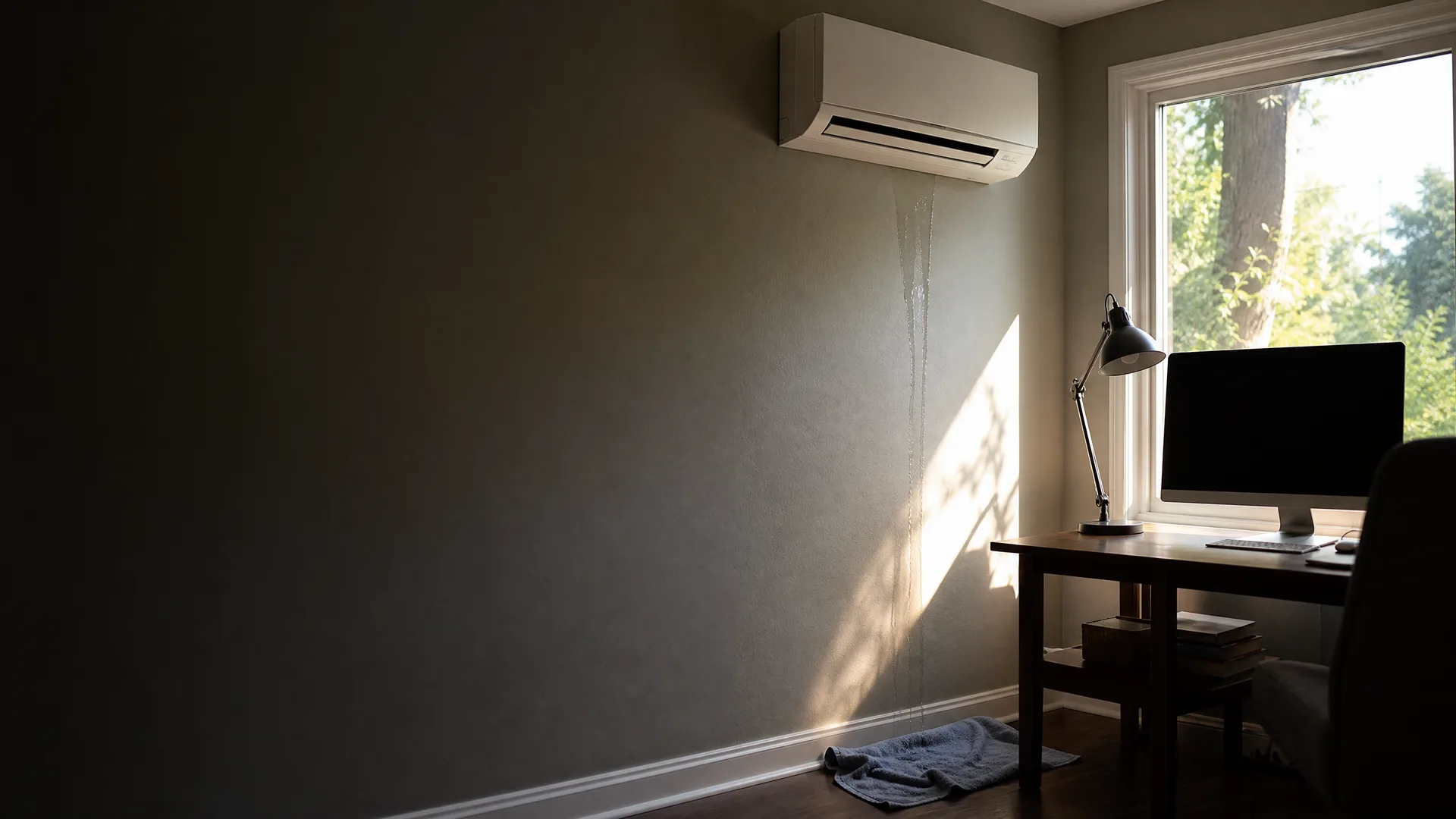
It's a July afternoon and you're at the desk in the home office, door shut so the dog doesn't wander in during a call. You notice the carpet first, damp under your sock, then look up and see the streak running down the wall below the indoor unit. You grab the towel from the hall bathroom and lay it against the baseboard. The unit's still blowing, still cooling the room fine, which is almost worse, because nothing about the way it sounds tells you anything is wrong. Outside, South Dakota summer air is dry enough that condensation shouldn't be pooling like this. You stand there a second, towel under your foot, wondering how long it's been doing this before you noticed.

If the mini split is what carries heat to a bedroom or a converted space that isn't on the furnace, you know within an hour that it's off. The room cools down fast once that unit stops, especially with South Dakota air outside pulling heat through the walls. Whoever sleeps or works in that room is the one who notices first, and the one who has to find somewhere else to be until it's fixed.
You could spend the evening searching for someone who works on mini splits, not just furnaces, since not every HVAC company touches this equipment. Then you'd be calling around, explaining the same thing to each one, and weighing quotes against each other while the room stays cold. Go through this page instead and that search ends with one contractor, local, who works on these units through the South Dakota winter and already knows what tends to fail when the outdoor unit won't fire up in the cold.



If most of your house runs on gas heat and the mini split only covers one room, a cold night without it means that room drops fast while the rest of the house stays fine. You might not notice right away if it's a spare bedroom. You notice within the hour if it's where someone is sleeping or where a kid does homework after school. Space heaters can get you through a night, but they're not built to run for days, and running one next to bedding or furniture isn't something to do for long. Power here is cheap, so the cost of waiting on a fix isn't really the electric bill. It's the room sitting cold on the one week it's below zero outside, and whoever uses that room having to camp out somewhere else in the house until the unit is running again.
At under 14 cents a kilowatt-hour, running the mini split itself was never the expensive part. The cost shows up when it sits broken and a space heater or extra gas heat has to cover that one room instead.
EIA-861 2025 statewide residential average
The outdoor unit is where the answer usually sits. Ice on the coil, a defrost board that stopped switching, or a unit that just can't keep up once the air drops below zero, that's what stops a mini split from powering on in a South Dakota cold snap. Nothing about that is visible from the thermostat or the breaker panel, which is why clearing snow and checking the power helps you rule things out but doesn't bring the unit back on by itself.
Finding someone who actually works on these units through winters like this one is the part that usually eats your afternoon. You'd normally be the one calling around, explaining the symptoms more than once, and trying to tell which company has actually handled a frozen coil or a dead defrost board before and which one is guessing same as you. Submitting through this page skips that. One contractor, local to South Dakota, takes the job. Someone who's been out on calls like this all winter already has a good idea what's inside that outdoor cabinet before they knock the ice off it.
The room that unit heats stays cold until it's running again, whether that's a bedroom, a converted space, or anywhere else your furnace doesn't reach. That part doesn't change. What changes is how fast you get the right person looking at it instead of you working through the problem alone at the panel.
Skip the calls to every shop