Tell us about the job
Takes about a minute. No obligation.
A contractor called out to repair a mini-split in Todd County has a narrow window to work with. Homes in Todd County, SD run cooling about two months a year, from July through August. That compressed season means the compressor, the contactor, and the condenser fan motor absorb everything the house demands in a short, concentrated run. When those parts give out, they give out fast and completely, which is why a diagnostic here starts at the components that cycle hardest under peak load. Refrigerant drift and coil fouling show up too, but they rank behind the mechanical parts that took the full weight of the season.
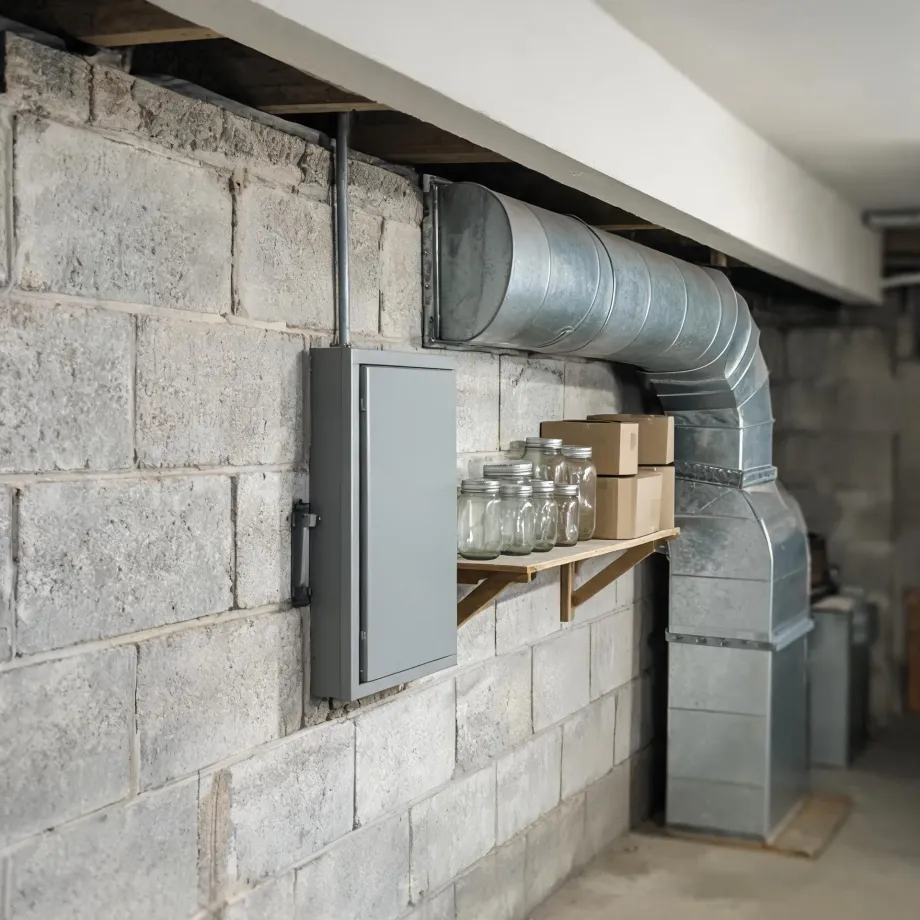
Older housing adapted for newer equipment accumulates a history inside the walls, but for a mini-split repair, what drives the job is what the opened unit turns out to contain. Half the homes in Todd County, South Dakota were built in 1981 or earlier (2020-2024 ACS 5-year). Housing that predates today's equipment has often been through a system change or two, and those changes settle into the equipment rather than the structure. A refrigerant seal, a control board, a drain line fitting: whether the right part is still made for the unit on the wall is the question that sets the scope and the timeline for the repair.
The Parts of a Mini-split a Contractor Checks First
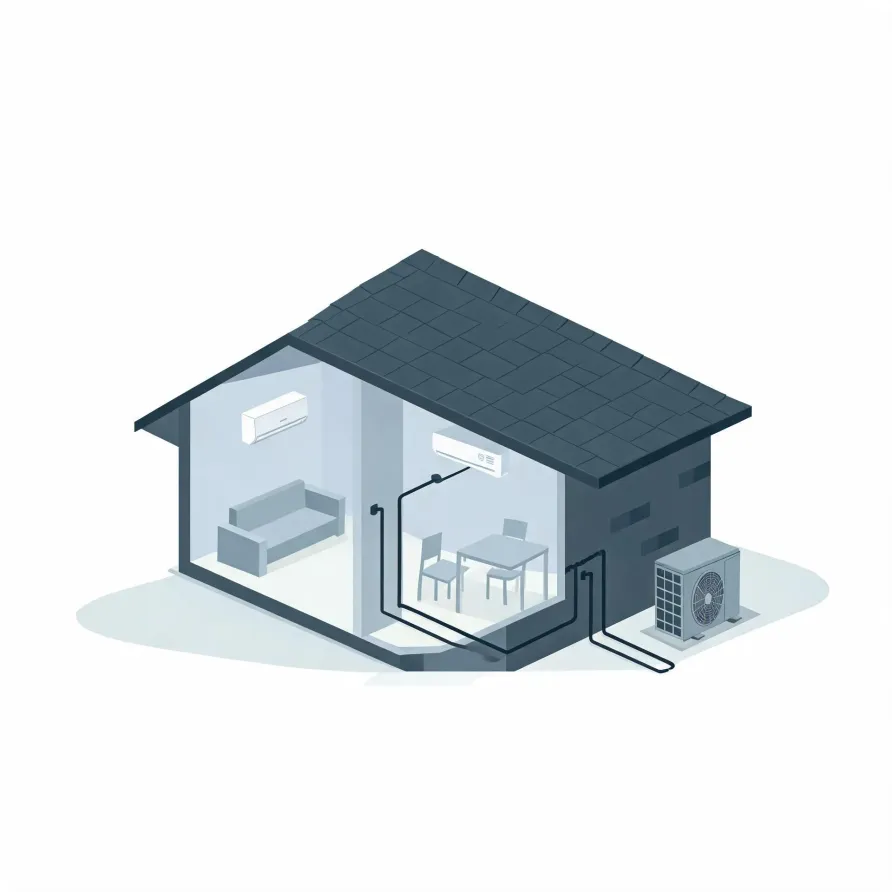
The indoor air handler mounts high on an interior wall and is the piece a homeowner sees every day. Its fan, coil, and filter are where many problems show up first: a frozen coil, a clogged filter, or a fan motor that has stopped pulling air across the unit.
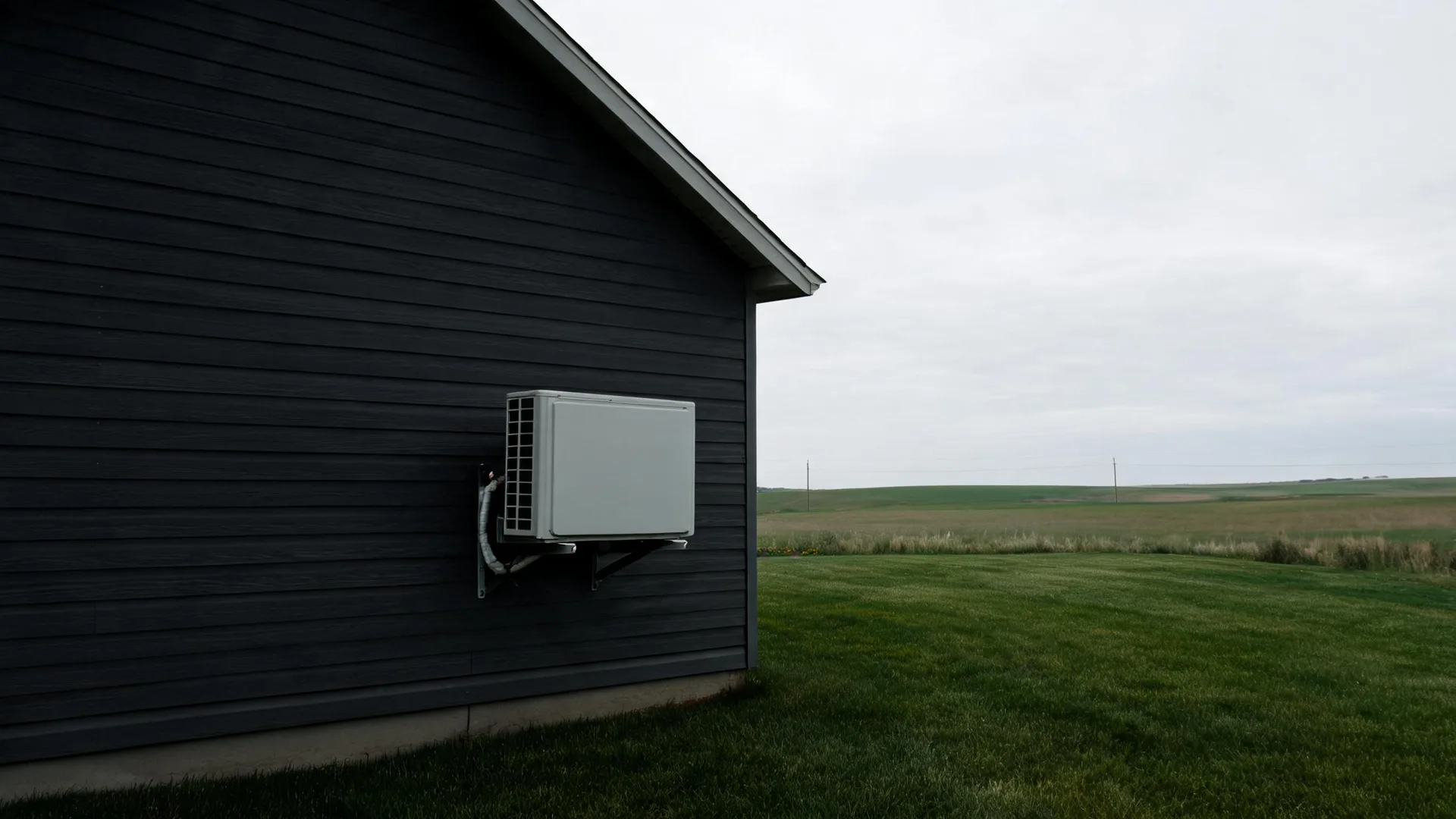
The outdoor condenser sits outside on a pad or wall bracket and holds the compressor and the second coil. The refrigerant lines and the condensate drain run between the two units, and a fault anywhere along that path, whether a refrigerant leak or a blocked drain, sends a contractor tracing the system from one end to the other.
The drawing shows a typical layout, and a licensed contractor determines what applies to your specific setup.
Find a contractor in Todd CountyTodd County by the Numbers
225 severe weather events were recorded in Todd County, South Dakota between 2015 and 2024.
NOAA National Centers for Environmental Information, Storm Events Database, bulk CSV export, events 2015-01-01 through 2024-12-31.Half the homes in Todd County, South Dakota were built in 1981 or earlier (2020-2024 ACS 5-year).
U.S. Census Bureau, 2020-2024 American Community Survey 5-Year EstimatesTodd County, South Dakota holds 2,879 housing units (2020-2024 ACS 5-year).
U.S. Census Bureau, 2020-2024 American Community Survey 5-Year EstimatesOwners occupy 46.3% of the occupied homes in Todd County, South Dakota (2020-2024 ACS 5-year).
U.S. Census Bureau, 2020-2024 American Community Survey 5-Year EstimatesSevere Weather Events in Todd County
Extreme weather puts real strain on heating and cooling equipment, and how often that happens here shapes how hard local mini-split systems have to work. Repair needs in Todd County follow from that load.
225 severe weather events, 2015–2024. Source: NOAA National Centers for Environmental Information, Storm Events Database.